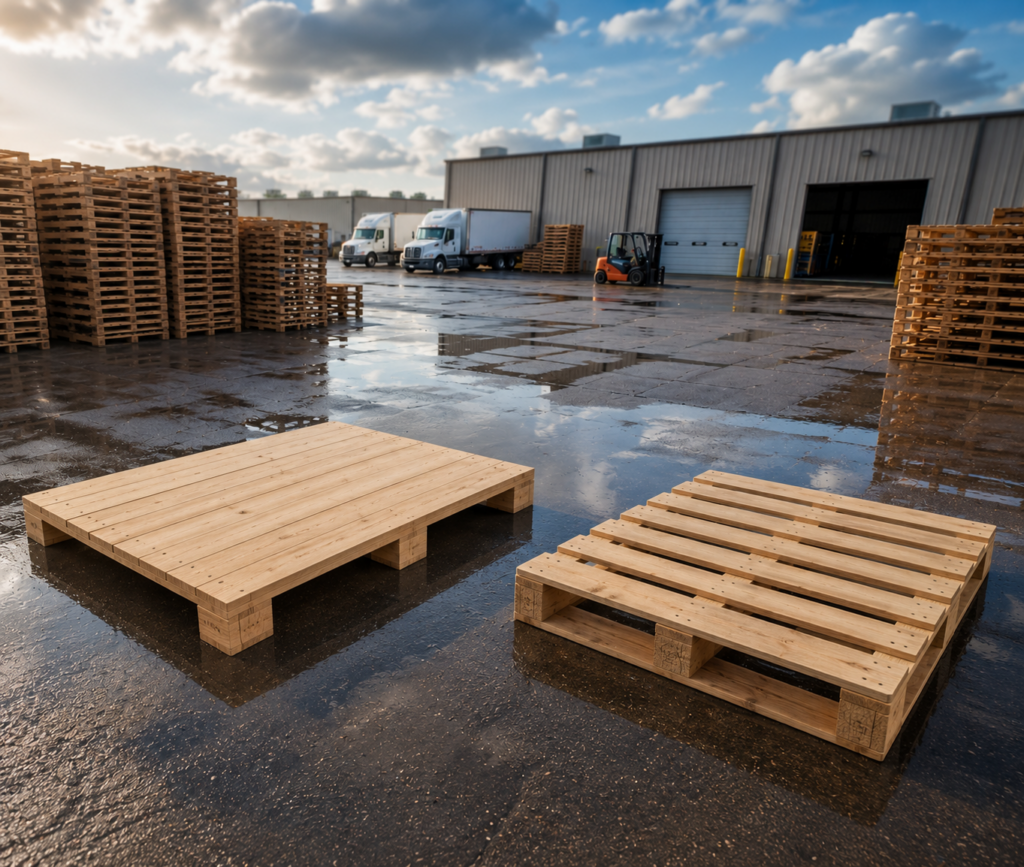
At first glance, a skid pallet and a standard pallet appear almost identical, yet one design difference changes how they’re handled, where they’re used, and which products they support best. Choosing the right platform isn’t simply about moving a load, it’s about matching the equipment to your storage, transportation, and operational requirements.
This guide explains what a skid pallet is, how it differs from a pallet, and the situations where each option makes the most practical sense.
Skid vs Pallet at a Glance
Although a skid pallet and a standard pallet may appear similar, one structural difference changes how they’re lifted, stored, and used. The comparison below provides a quick overview before we look at each option in more detail.
Skid vs Pallet Comparison
| Feature | Skid | Pallet |
|---|---|---|
| Bottom deck | No | Yes |
| Forklift entry | Typically two-way | Usually four-way |
| Best suited for | Machinery, stationary equipment, one-way transport | Warehousing, storage, distribution, repeated handling |
| Stackability | Limited | Better for stacking and racking |
| Weight | Generally lighter | Usually heavier due to the bottom deck |
| Handling efficiency | Suitable for basic movement | Designed for frequent material handling |
| Typical applications | Industrial equipment, manufacturing, export bases | Logistics, retail distribution, warehouse operations |
The Biggest Difference
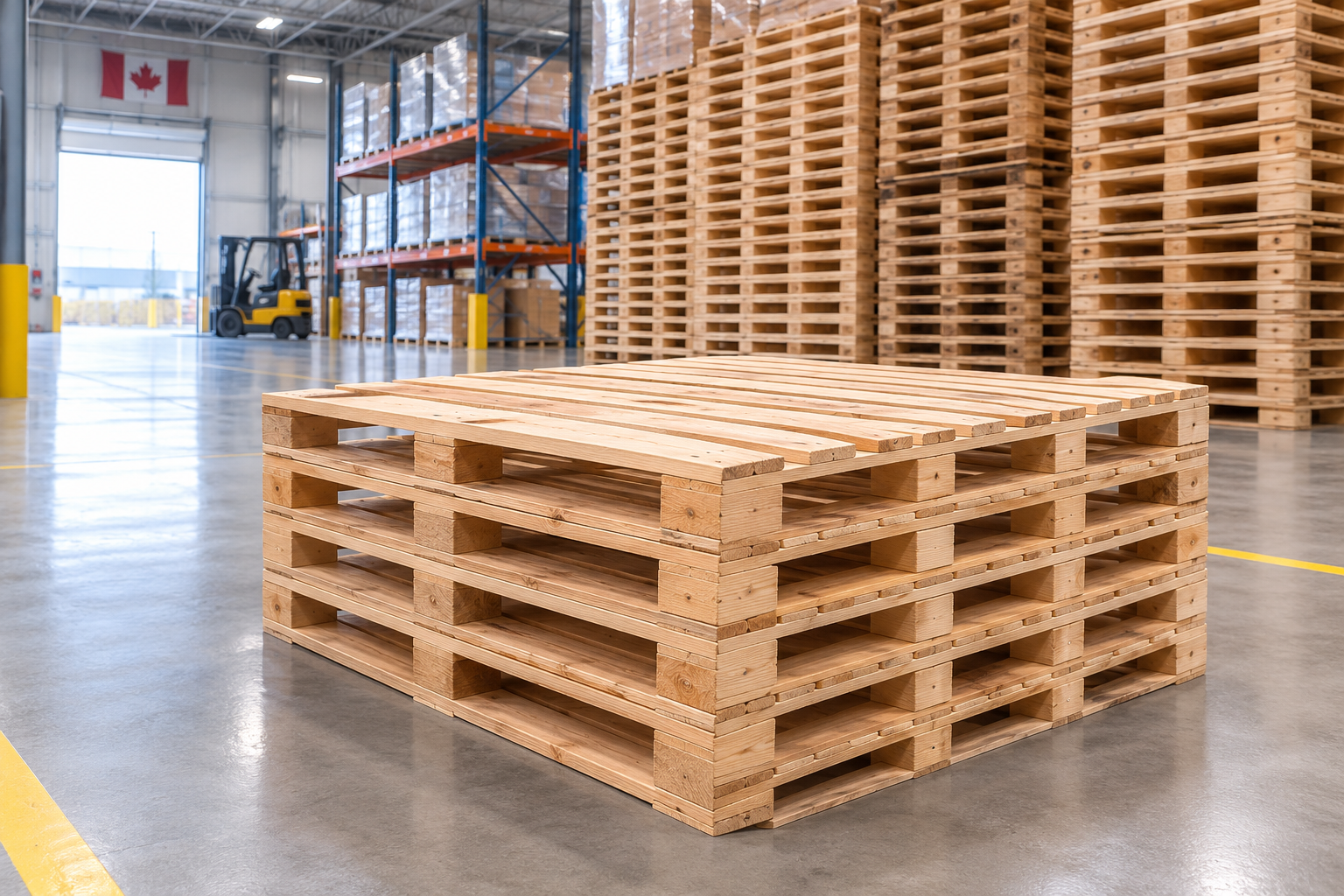
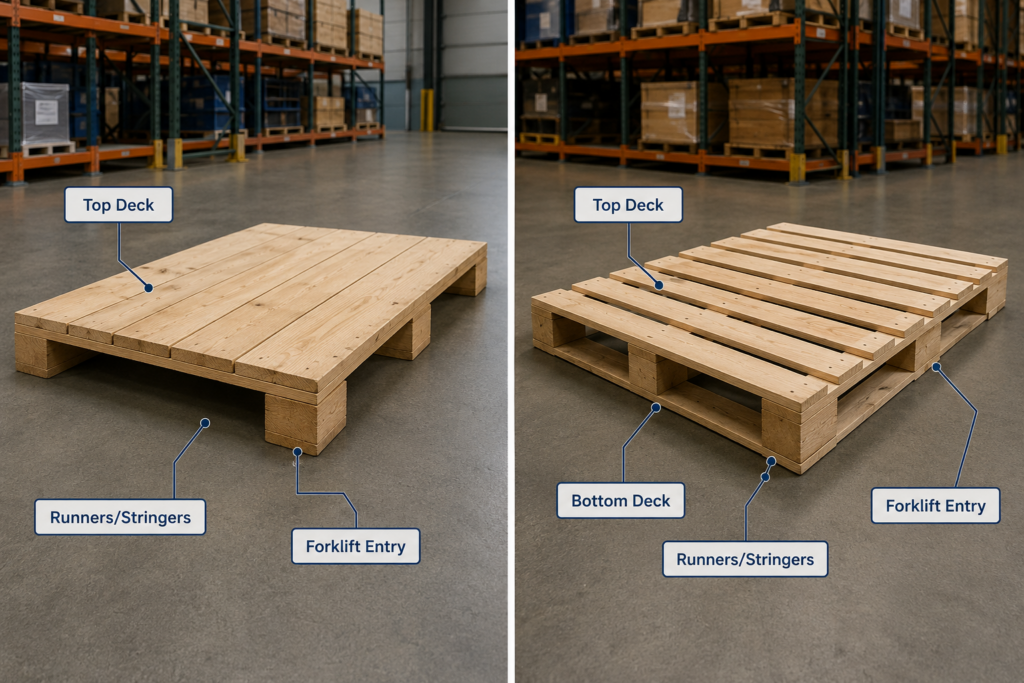
The defining feature of a skid pallet is the absence of a bottom deck. Instead of resting on upper and lower deck boards like a pallet, the load is supported directly by runners or stringers. This simpler construction makes skids well suited for applications where products remain on the same base throughout manufacturing, storage, or transportation.
A standard pallet, on the other hand, is designed for repeated handling. The additional bottom deck improves stability, supports stacking, and allows more efficient movement throughout warehouses and distribution centres.
Quick Takeaway: If your priority is frequent forklift handling, warehouse storage, and efficient logistics, a pallet is usually the better choice. If the platform will primarily support heavy equipment or act as a permanent transport base, a skid pallet is often the more practical solution.
Why Does a Skid Have No Bottom Deck?
The easiest way to recognize a skid pallet is by what’s missing rather than what’s added. Unlike a standard pallet, a skid is built without a bottom deck, allowing the platform to rest directly on its supporting runners. This simple design has been used for decades in industrial environments where products remain on the same base throughout manufacturing, storage, or transportation.
Removing the bottom deck isn’t a shortcut to reduce material, it’s a design choice. For applications where loads don’t need to be stacked or moved repeatedly through warehouse racking systems, a skid can provide a practical and economical foundation while using fewer components than a conventional pallet.
How Does the Design Affect Performance?
The construction of a wooden skid influences how it performs during handling and storage.
| Design Feature | Practical Benefit |
|---|---|
| No bottom deck | Simpler construction with fewer wooden components |
| Direct runner support | Provides a stable base for stationary or heavy equipment |
| Lower overall weight | Can reduce material usage and make the platform easier to handle when empty |
| Open underside | Suitable for applications where full four-way handling isn’t required |
Important: A simpler design doesn’t automatically mean a skid is better or worse than a pallet. It simply means it was created for different operational requirements.
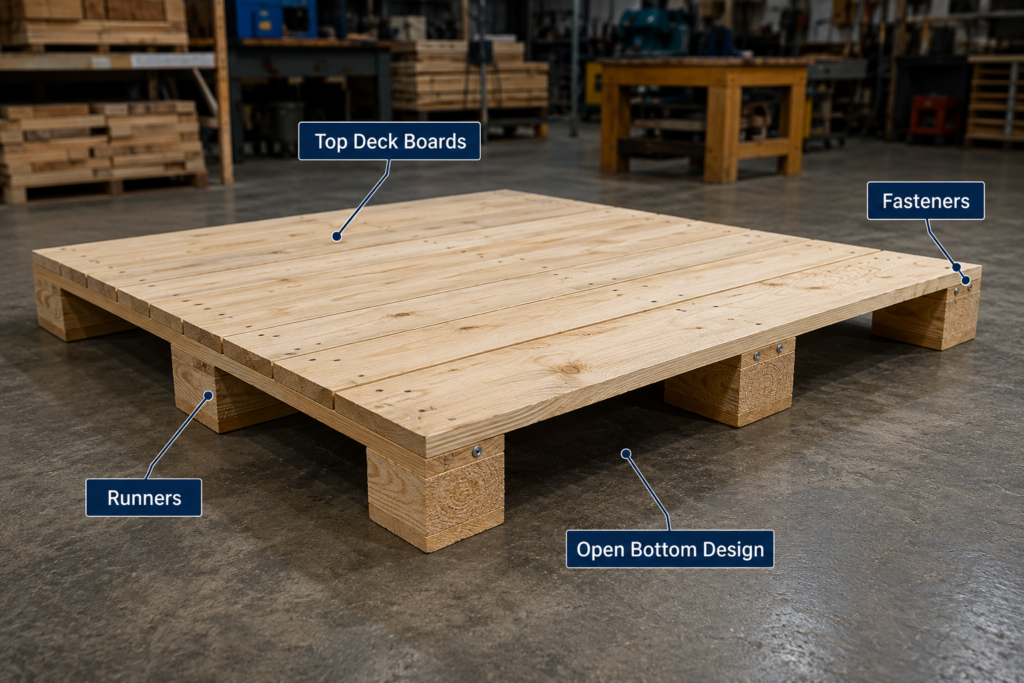
Expert Insight: Many buyers assume that a platform with more wood is always stronger. In reality, load capacity depends on the overall engineering of the platform, including runner dimensions, lumber quality, fastener placement, and how the weight is distributed, not just the number of boards used.
This is why a properly designed pallet skid can safely support heavy industrial equipment, even though it has fewer structural components than a standard pallet.
When Is a Skid the Better Choice?
Choosing between skids vs pallets isn’t about deciding which platform is universally better. The more useful question is where each design performs best. A skid is often selected when the platform becomes part of the operation itself rather than simply acting as temporary shipping equipment.
For example, large industrial machines are frequently mounted on skids before they’re transported or installed. Because the equipment may remain on the same base from production through final delivery, the simpler construction provides a stable foundation without adding components that offer little practical value.
Situations Where a Skid Makes Practical Sense
| Application | Why a Skid Works Well |
|---|---|
| Industrial machinery | Provides a stable base that can remain under the equipment throughout its lifecycle. |
| Manufacturing operations | Allows products to be assembled, stored, and moved on the same platform. |
| One-way shipments | A practical choice when the platform isn’t expected to return through a logistics network. |
| Heavy equipment | Designed to support substantial loads while simplifying the overall construction. |
| Equipment awaiting installation | Keeps machinery elevated from the floor until it’s ready for use. |
Think Beyond Transportation
Many people associate a pallet skid only with shipping, but in manufacturing environments it often serves a much longer purpose. Equipment may remain on the skid during storage, transportation, installation, and even future relocation, reducing the need to transfer the load between multiple platforms.
This is one of the reasons skids continue to be widely used for industrial equipment, even in facilities where standard pallets handle everyday warehouse operations.
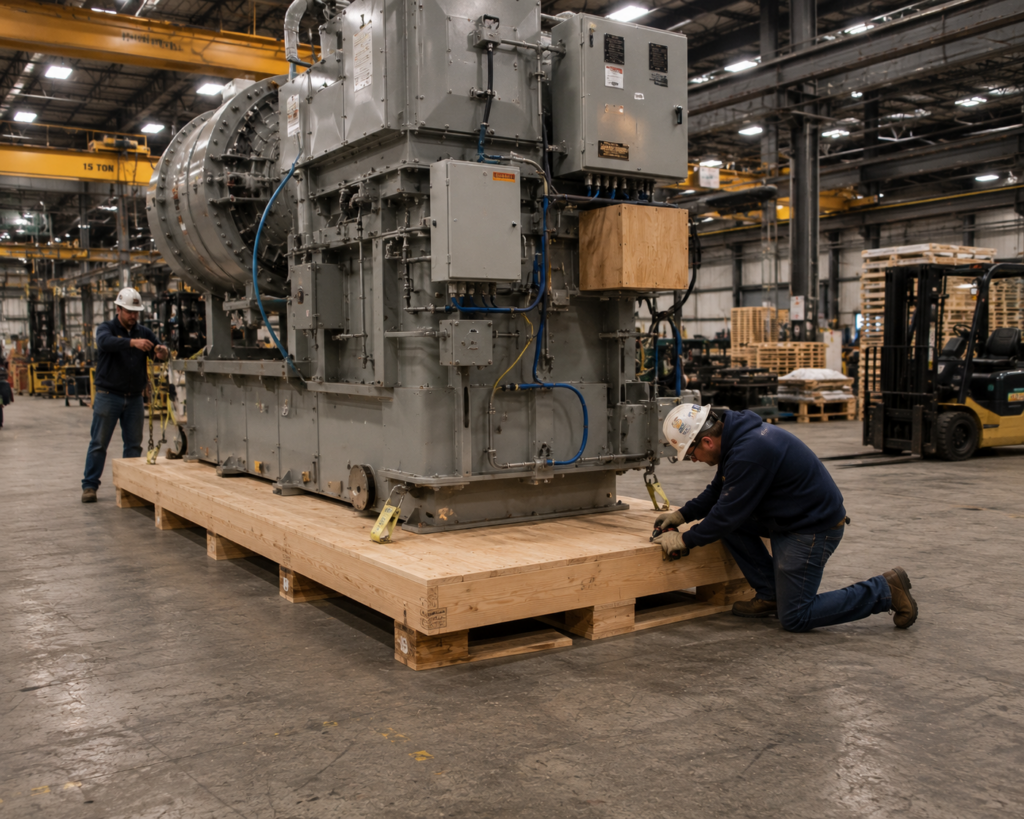
Expert Insight: A common buying mistake is choosing a skid simply because it uses less material. In reality, the decision should be based on how the product will be handled after it leaves the production floor. If the load will move through warehouse racking, frequent forklift operations, or automated handling systems, a pallet is often the better investment. If the platform mainly supports the product itself throughout its lifecycle, a skid may be the more practical solution.
When equipment requires a platform that’s built around specific dimensions or load requirements, custom pallets can provide a tailored handling solution for industrial applications.
Can a Skid Replace a Pallet?
After learning the structural differences, it’s natural to ask whether a skid can simply replace a pallet in every application. In most cases, the answer is no. Although both platforms support and move products, they are designed for different handling environments and operational goals.
One of the most common questions buyers ask is “is a skid a pallet?” The short answer is no. A skid and a pallet share a similar purpose, but their construction changes how they’re lifted, stored, stacked, and integrated into warehouse operations.
Likewise, if you’ve ever wondered “are skids and pallets the same?”, the answer is again no. Choosing between them depends less on appearance and more on how the product will move through your supply chain.
Choosing the Right Platform
Instead of asking pallet vs skid—which is better?, consider what the platform needs to accomplish.
| If your priority is… | Better Choice |
|---|---|
| Supporting heavy machinery throughout its lifecycle | Skid |
| Frequent warehouse handling | Pallet |
| High-density storage and stacking | Pallet |
| Permanent equipment base | Skid |
| Distribution through multiple facilities | Pallet |
| Simple one-way industrial transport | Skid |
Think About the Entire Journey
The best platform isn’t determined at the loading dock, it’s determined by everything that happens afterward. A product moving through distribution centres, warehouse racking, and repeated forklift handling has very different requirements from equipment that stays on the same base until installation.
Looking at the complete handling process often makes the decision much clearer than comparing the platforms on construction alone.
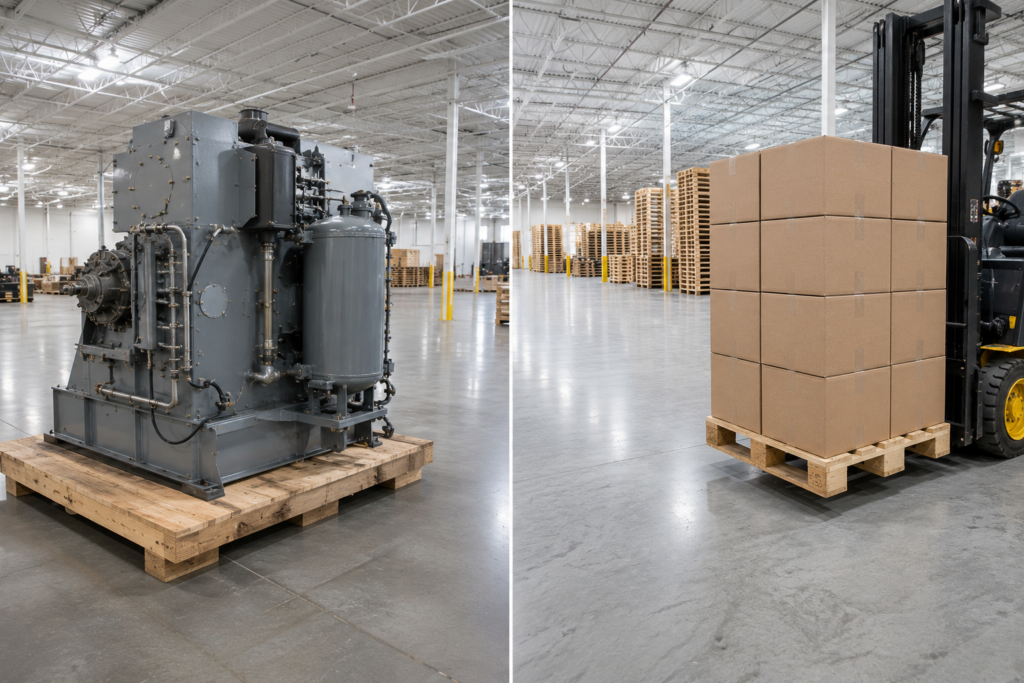
Key Takeaway: A skid isn’t a simplified version of a pallet, and a pallet isn’t an upgraded skid. Each was developed to solve different material-handling challenges. Selecting the right option means matching the platform to the way the product will actually be stored, transported, and used.
For operations that require frequent forklift access from every side, 4-way pallets are often a more practical option than traditional platform designs.
How Big Is a Skid Pallet?
There isn’t a single standard size that fits every skid pallet. The right dimensions depend on the equipment being supported, the available handling equipment, transportation method, and storage space. While many industrial skids are built around common shipping footprints, custom sizes are equally common for machinery and specialized products.
If you’re searching “how big is a skid pallet”, the answer is that the platform should match the load, not the other way around. A properly sized skid supports the product evenly and reduces unnecessary overhang or unsupported weight.
Common Skid Sizes
| Skid Size | Common Applications |
|---|---|
| 48″ × 40″ | General industrial equipment and shipping |
| 42″ × 42″ | Manufacturing and export applications |
| 48″ × 48″ | Large containers and bulk loads |
| Custom sizes | Machinery, fabricated components, oversized products, and equipment with unique footprints |
Bigger Isn’t Always Better
Choosing a larger skid may seem like the safer option, but excess platform space can create handling challenges, increase material costs, and make transportation less efficient. At the same time, a skid that’s too small may fail to distribute weight correctly or leave parts of the load unsupported.
Selecting the right dimensions means considering the product’s footprint, total weight, centre of gravity, and the way it will be lifted throughout its journey.
Choosing the Right Skid for Your Application
Selecting the right skid pallet isn’t simply a matter of dimensions. A platform that performs well for heavy manufacturing equipment may not be suitable for export shipments, while a skid designed for one-way transport may not be the best option for products that move repeatedly through a warehouse.
Before making a decision, evaluate how the platform will be used throughout its entire lifecycle—not just during shipping.
Choosing the Right Skid for Your Application
Selecting the right skid pallet isn’t simply a matter of dimensions. A platform that performs well for heavy manufacturing equipment may not be suitable for export shipments, while a skid designed for one-way transport may not be the best option for products that move repeatedly through a warehouse.
Before making a decision, evaluate how the platform will be used throughout its entire lifecycle, not just during shipping.
A Practical Buying Checklist
| Consideration | Why It Matters |
|---|---|
| Product weight | Determines the runner design, lumber specifications, and overall load capacity. |
| Load dimensions | Helps prevent unsupported edges and improves stability during handling. |
| Lifting equipment | Forklifts, pallet jacks, cranes, and other equipment may require different platform designs. |
| Transportation method | Road, rail, ocean freight, and local delivery can influence the ideal skid construction. |
| Reuse expectations | Some skids are intended for long-term industrial use, while others are designed for one-way shipments. |
| Operating environment | Moisture, outdoor storage, and demanding industrial conditions may affect material selection. |
Think Beyond the Initial Purchase
The lowest purchase price doesn’t always translate into the lowest operating cost. A skid that’s properly matched to its application can reduce handling issues, improve equipment stability, and minimize the likelihood of product damage throughout transportation and storage.
Looking at the complete operating cost often leads to a better long-term decision than comparing prices alone.
Final Thoughts
A skid pallet and a standard pallet may serve a similar purpose, but they’re designed for different handling environments. Understanding how each platform performs makes it easier to choose a solution that supports your products safely, improves operational efficiency, and avoids unnecessary handling challenges.
Rather than asking whether a skid or pallet is better, focus on how the platform will be used throughout storage, transportation, and final delivery. Selecting the right design from the start can improve workflow, reduce the risk of product damage, and support more efficient material handling over the long term.
Looking for the Right Pallet Solution?
Every operation has different handling requirements, and the most effective solution isn’t always a standard skid or pallet. Factors such as product dimensions, load capacity, transportation methods, and warehouse operations all influence which platform will perform best.
If you’d like to learn more about our manufacturing capabilities, meet the team behind The Pallet Factory to see how we design and build pallet solutions for businesses across British Columbia. When you’re ready to discuss your specific handling or shipping requirements, talk with our pallet specialists for practical guidance tailored to your operation.