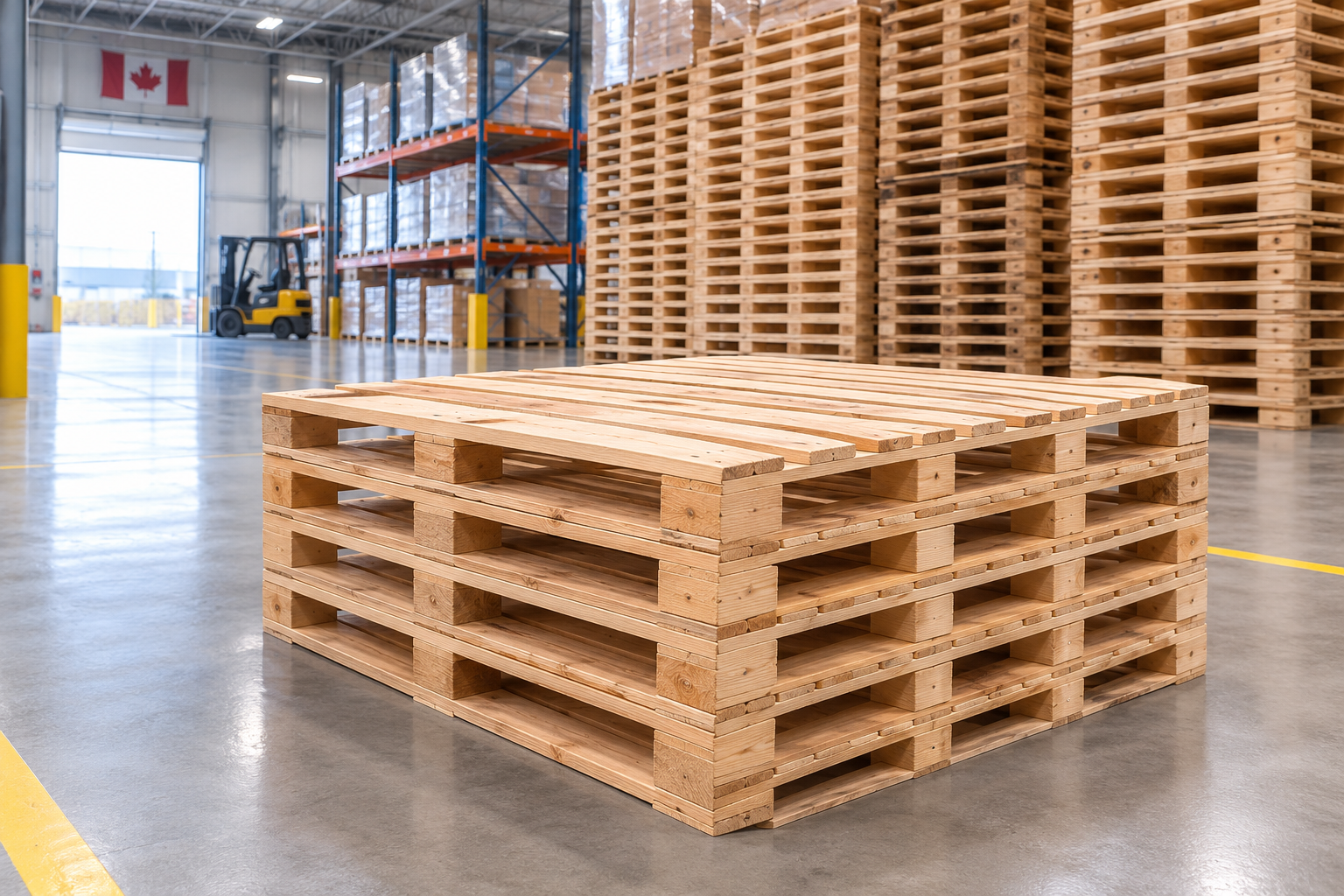
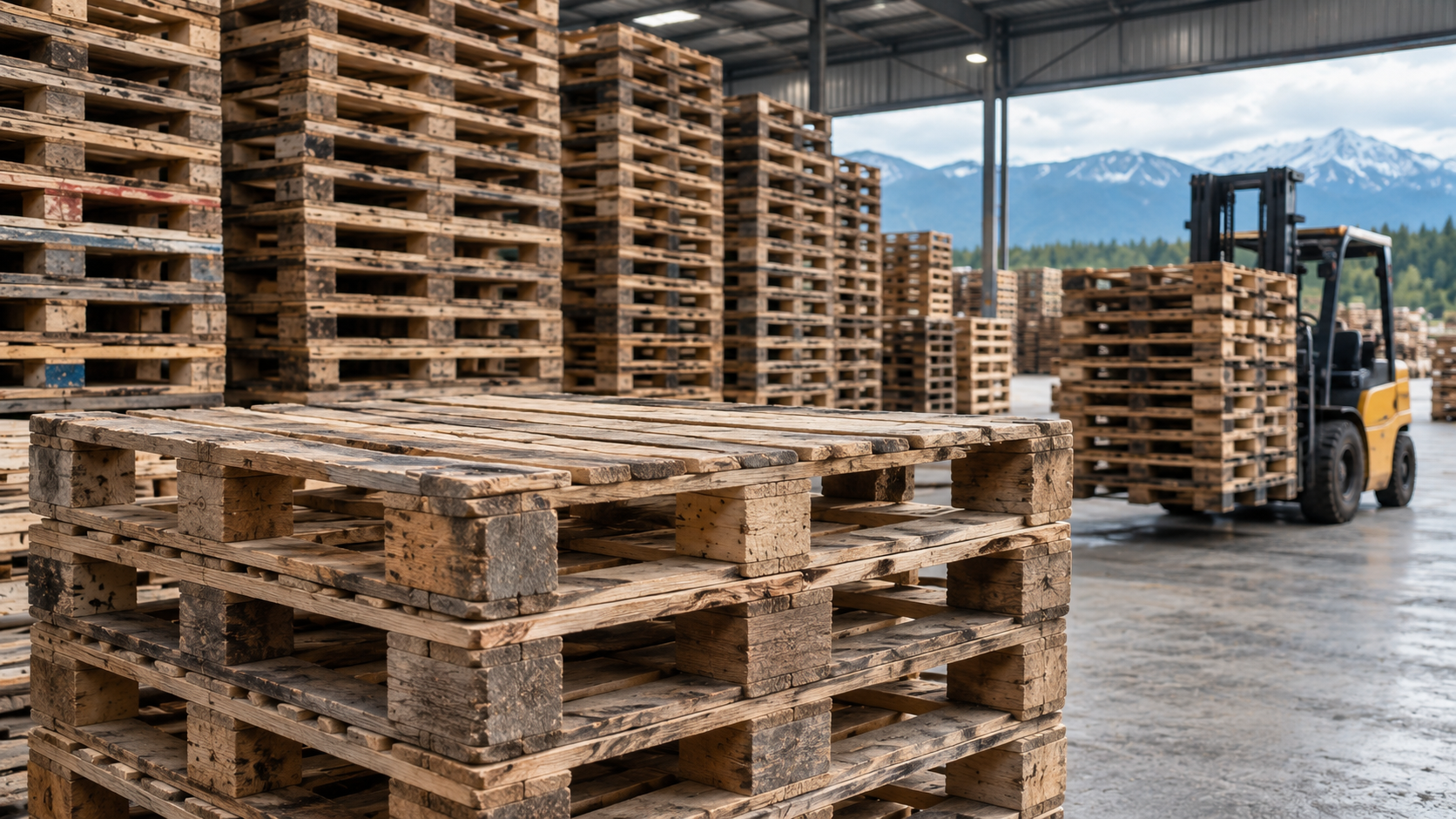
Wing pallet designs are built for products that need more support than a standard pallet can provide. By extending the deck boards beyond the pallet’s frame, they help stabilize wide, long, or irregular loads during storage, handling, and transportation.
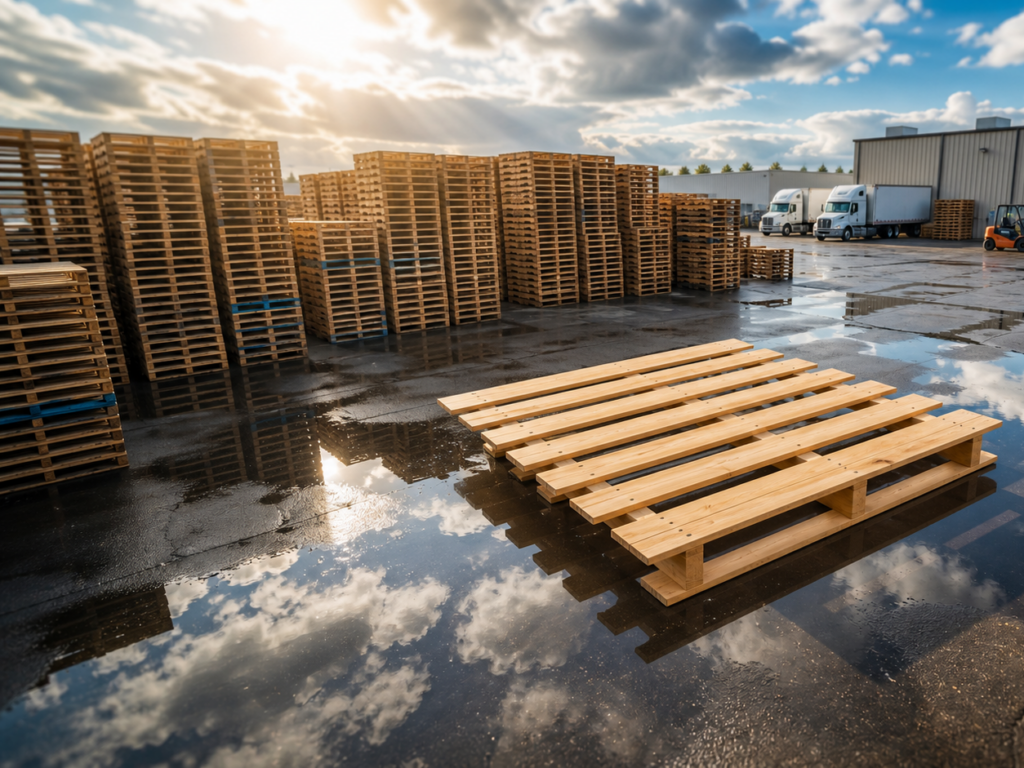
Whether you’re shipping building materials, industrial equipment, or oversized products, choosing the right pallet design can improve load stability and reduce the risk of damage. This guide explains how wing pallets work, when they’re the right choice, and what to consider before selecting one for your operation.
At a Glance
| Feature | Details |
|---|---|
| Primary Use | Supporting long, wide, or overhanging loads |
| Base Design | Modified stringer pallet with extended deck boards |
| Available Configurations | Single-wing pallet and double-wing pallet |
| Common Materials | Wood (most common), plastic, and metal |
| Typical Industries | Building materials, manufacturing, metal fabrication, furniture, retail distribution |
| Forklift Access | Two-way or four-way, depending on the pallet design |
| Export Ready | Available with ISPM-15 heat treatment for international shipping |
| Best For | Products that require additional deck support beyond a standard pallet footprint |
Why Do Some Pallets Have Wings?
The defining feature of a wing pallet isn’t simply the extended deck boards, it’s the additional support they provide for loads that extend beyond the main pallet frame. Instead of ending flush with the stringers, the top deck boards project outward to create extra bearing surface where it’s needed most.
This design is especially valuable when products are longer or wider than a conventional pallet footprint. Without adequate support, overhanging loads can flex under their own weight, become unstable during handling, or place unnecessary stress on the pallet structure. Wing extensions help distribute that weight more evenly across the deck, improving stability throughout storage and transportation.
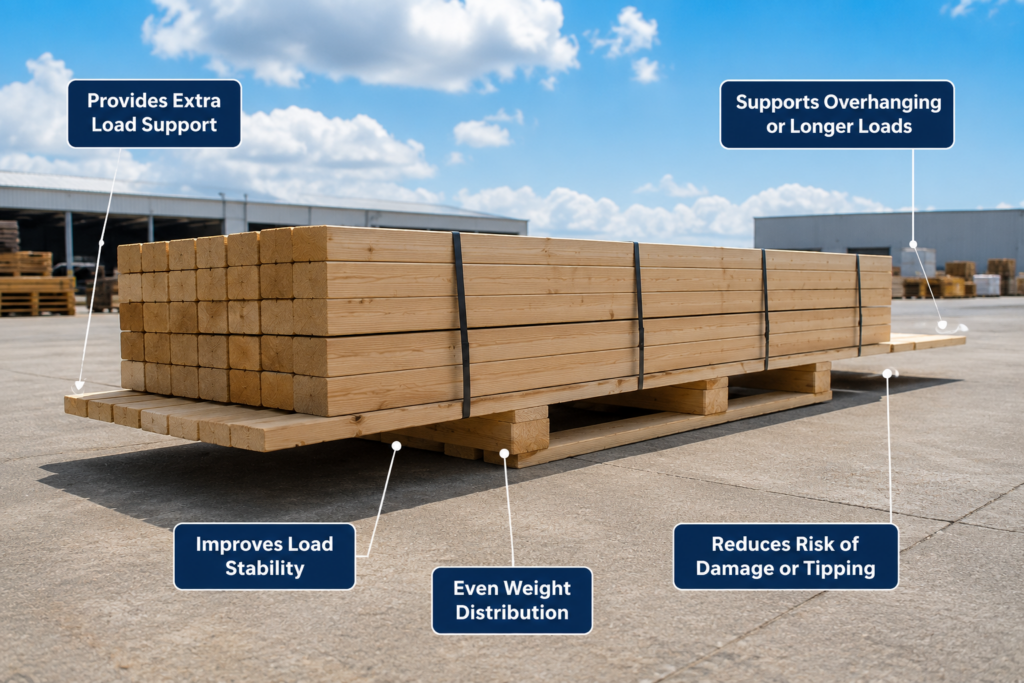
Unlike a standard pallet, where the deck boards finish at the edge of the frame, a wing pallet creates usable support beyond the stringers. That additional surface can make a significant difference when handling long timber, metal sections, fabricated components, or other oversized products that require consistent support from end to end.
How Wing Extensions Improve Load Support
| Standard Pallet | Wing Pallet |
|---|---|
| Deck boards end at the pallet frame. | Deck boards extend beyond the stringers to increase the supporting surface. |
| Better suited for products that fit within the pallet footprint. | Designed for loads that extend beyond the pallet dimensions. |
| Limited support for long or wide products. | Helps distribute weight more evenly across oversized loads. |
| Best for general warehouse and distribution applications. | Commonly selected for products requiring additional edge support during handling and transport. |
Engineering Note: The “wings” don’t increase performance simply because they’re larger. Their value comes from supporting the product at critical points beyond the pallet frame, helping reduce concentrated stress and improving load stability. The amount of extension is determined by the product’s dimensions, weight, and handling requirements rather than using a fixed measurement for every application.
Because a wing pallet is built on the same foundation as a stringer pallet, understanding its base construction can help when selecting the right design for different applications.
Single-Wing or Double-Wing: Which Design Fits Your Load?
Not every wing pallet is built the same. While both designs extend beyond the main pallet frame, the way those extensions are incorporated affects load support, handling, and the environments where the pallet performs best.
The choice usually comes down to the type of product being shipped, how it will be handled, and whether the pallet needs additional support from one side or both.
Single-Wing vs. Double-Wing Pallets
| Feature | Single-Wing Pallet | Double-Wing Pallet |
|---|---|---|
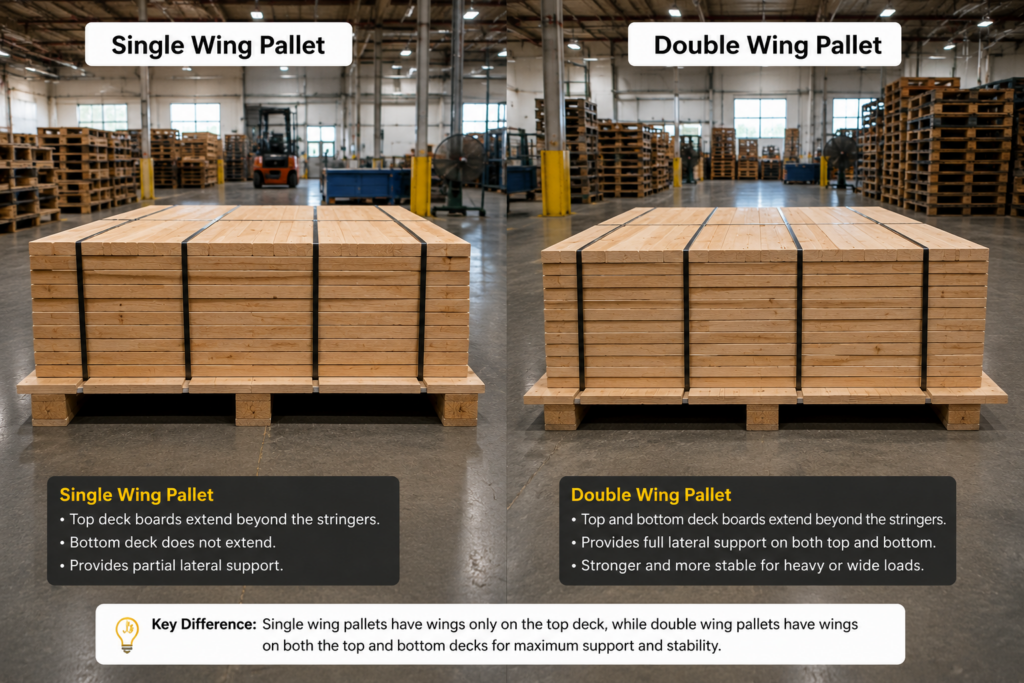
| Deck extension | Top deck extends beyond the stringers | Both top and bottom decks extend beyond the stringers |
| Best suited for | General industrial shipping and warehouse operations | Heavy, oversized, or high-value loads requiring additional support |
| Material usage | Less lumber, making it a more economical option | More material for increased structural support |
| Handling | Compatible with most standard handling equipment | May require checking rack and conveyor clearances before use |
| Common applications | Manufacturing, distribution, retail shipments | Lumber, steel products, large fabricated components, export loads |
When a Single-Wing Design Makes Sense
A single-wing pallet is often the preferred choice when products need extra deck support without adding unnecessary material or weight. It provides additional surface area on the top deck while maintaining compatibility with most conventional warehouse operations.
This configuration is commonly selected for products that extend slightly beyond a standard pallet footprint but don’t require reinforced support from both sides.
When a Double-Wing Design Is Worth Considering
A double-wing pallet extends both the upper and lower deck boards beyond the stringers, creating a stronger platform for demanding applications. The additional deck extension helps improve load distribution, particularly for long products or heavier materials that benefit from extra support across the entire pallet structure.
Before choosing this design, it’s important to confirm that warehouse racking systems, conveyors, and automated handling equipment provide sufficient clearance for the extended deck boards.
Warehouse Insight: The strongest design isn’t automatically the best choice. In many operations, a single-wing pallet provides all the support that’s needed while remaining easier to integrate with existing warehouse equipment. Selecting the right configuration depends on the product and handling process, not simply on using the largest pallet available.
For applications where full deck support isn’t required, block pallets may provide a practical alternative depending on the product and handling environment.
Wing Pallet vs Standard Pallet: What Changes in Real-World Applications?
At first glance, the difference between a wing pallet and a standard pallet may seem minor. In practice, however, that additional deck extension can influence how products are supported, transported, and handled throughout the supply chain.
The biggest difference isn’t the pallet itself, it’s the type of load each design is intended to carry. Standard pallets are ideal for products that fit comfortably within the pallet footprint, while wing pallets are designed for loads that require extra support beyond the stringers.
Practical Comparison
| If your load… | Standard Pallet | Wing Pallet |
|---|---|---|
| Fits completely within the pallet footprint | Recommended | May not be necessary |
| Extends beyond the pallet edges | Limited support | Better deck support |
| Includes long timber, pipes, or metal sections | May create unsupported overhang | Helps distribute weight more evenly |
| Requires a cost-effective platform for general shipping | Suitable | Usually higher cost than required |
| Needs additional deck coverage without changing the base structure | Not designed for this purpose | Designed specifically for this application |
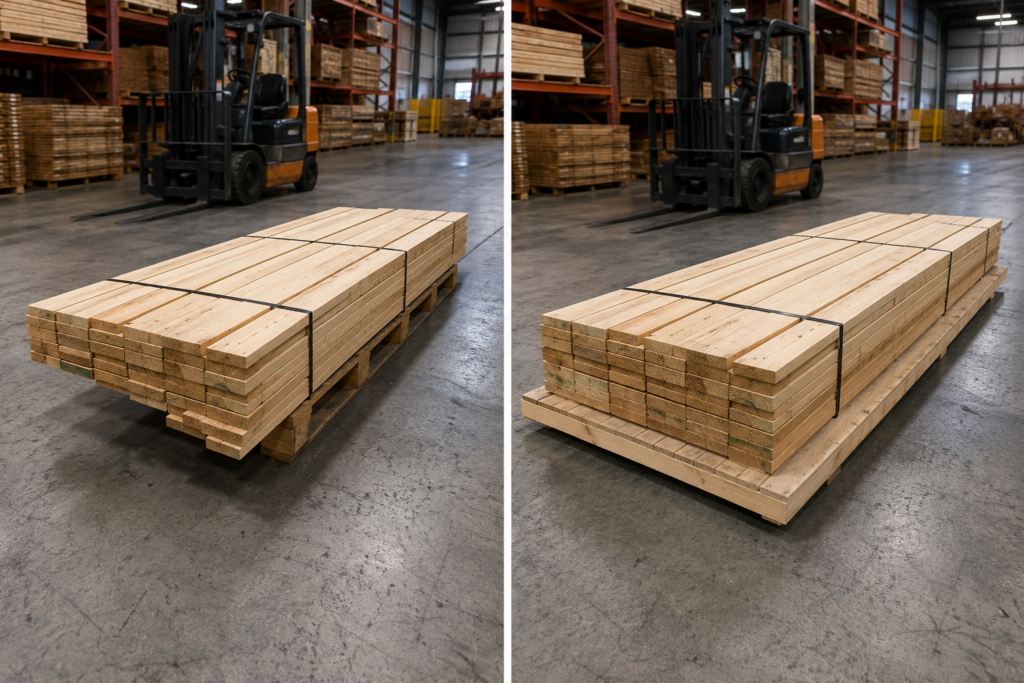
It’s About the Load, Not the Pallet
One of the most common misconceptions is that a wing pallet is simply a “stronger pallet.” In reality, its greatest advantage comes from supporting products that extend beyond a conventional pallet footprint. If the load fits entirely within a standard pallet, adding wing extensions often provides little practical benefit.
On the other hand, products such as timber, panels, fabricated steel, or oversized components place different demands on the supporting platform. In these situations, the additional deck surface helps spread the load more effectively and reduces unsupported sections that could otherwise flex during handling.
Buyer Tip: Start by evaluating the dimensions of the product, not the pallet. If the product naturally exceeds the edges of a standard pallet, that’s often the first indication that a wing pallet may provide a more suitable support platform.
Where Does a Wing Pallet Add the Most Value?
A wing pallet isn’t designed to replace every standard pallet in a warehouse. Its value becomes apparent when the product itself creates handling challenges that a conventional pallet wasn’t built to solve.
Whenever a load extends beyond the pallet footprint or requires additional support across its length, wing extensions help create a more stable platform. Rather than changing how the pallet is handled, they improve how the load is supported throughout storage and transportation.
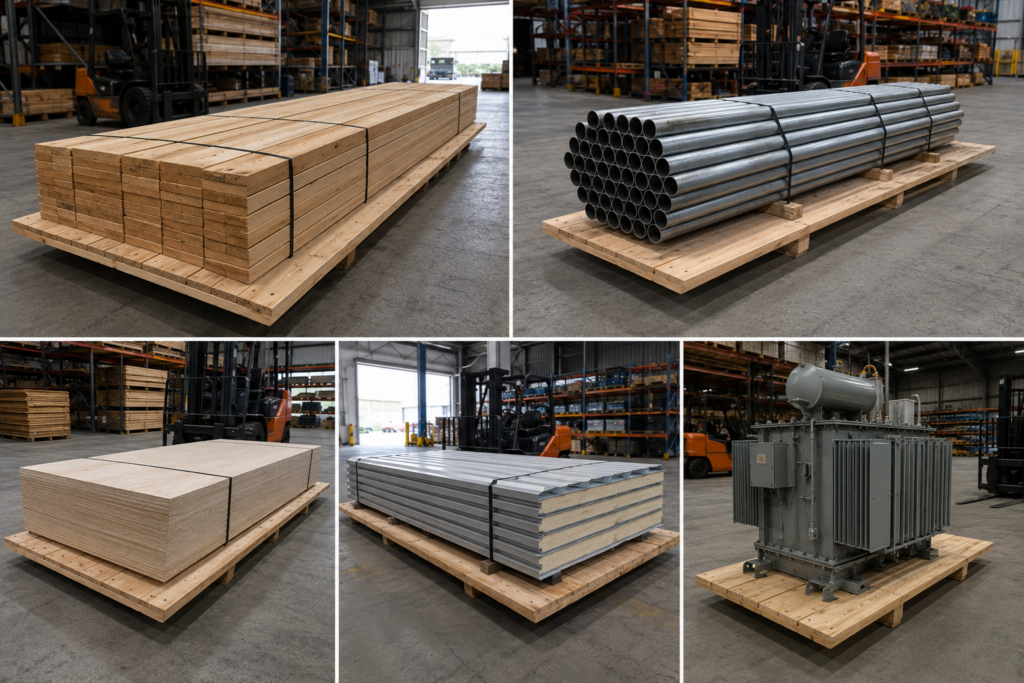
Applications Where Wing Pallets Perform Best
| Product or Load | Why a Wing Pallet Is Often Preferred |
|---|---|
| Lumber, timber, and mouldings | Supports long materials more evenly and reduces unsupported overhang. |
| Steel bars, pipes, and metal extrusions | Helps stabilize lengthy products during handling and transport. |
| Plywood, MDF, and large sheet materials | Provides additional deck support across wide panels. |
| Prefabricated building components | Keeps irregularly shaped products better supported during movement. |
| Large industrial assemblies | Offers a broader supporting surface for products that don’t fit neatly on a standard pallet. |
The Right Design Depends on the Product
A common mistake is selecting a pallet based only on its overall dimensions. In practice, the product’s shape, length, and weight distribution are equally important. Two loads with identical weights can require completely different pallet designs if one extends well beyond the supporting platform.
That’s why wing pallets are often chosen for products with challenging footprints rather than simply heavier loads.
Specification Advice
Wing extensions should support the product, not carry unsupported weight by themselves. If a product extends significantly beyond the pallet, the pallet should be engineered so the load is distributed across the stringers and deck boards, rather than concentrating stress on the outer edges of the wings.
How Wing Pallets Improve Load Support
The biggest advantage of a wing pallet isn’t that it’s larger, it’s that it supports the load more effectively where a standard pallet may leave parts of the product unsupported.
When products extend beyond the edges of a conventional pallet, the unsupported sections can place additional stress on the material during lifting, transportation, or storage. Over time, that extra movement may increase the risk of shifting, sagging, or unnecessary pressure on specific points of the load.
By extending the deck boards beyond the stringers, a wing pallet creates additional contact beneath the product. Instead of concentrating weight in the centre of the pallet, the load is supported across a wider surface, helping maintain better balance throughout the handling process.
Why Proper Weight Distribution Matters
Imagine lifting a long bundle of timber or a stack of large panels from the centre. If the ends aren’t adequately supported, the material naturally places more stress on the unsupported sections.
A wing pallet helps minimise that effect by increasing the supporting surface beneath the load. The result isn’t simply a larger pallet, it’s a platform that’s better suited to products with challenging dimensions.
Standard Pallet vs. Wing Pallet Under Load
| Load Situation | Standard Pallet | Wing Pallet |
|---|---|---|
| Long products extending beyond the pallet | Unsupported ends may place additional stress on the load. | Extended deck boards provide additional support beneath the overhanging sections. |
| Wide sheet materials | Limited support near the outer edges. | Wider supporting surface improves overall stability. |
| Unevenly shaped products | Weight may become concentrated in fewer contact points. | Better distribution across the deck helps improve balance. |
| General warehouse cartons | Typically provides sufficient support. | Additional deck area usually isn’t necessary. |
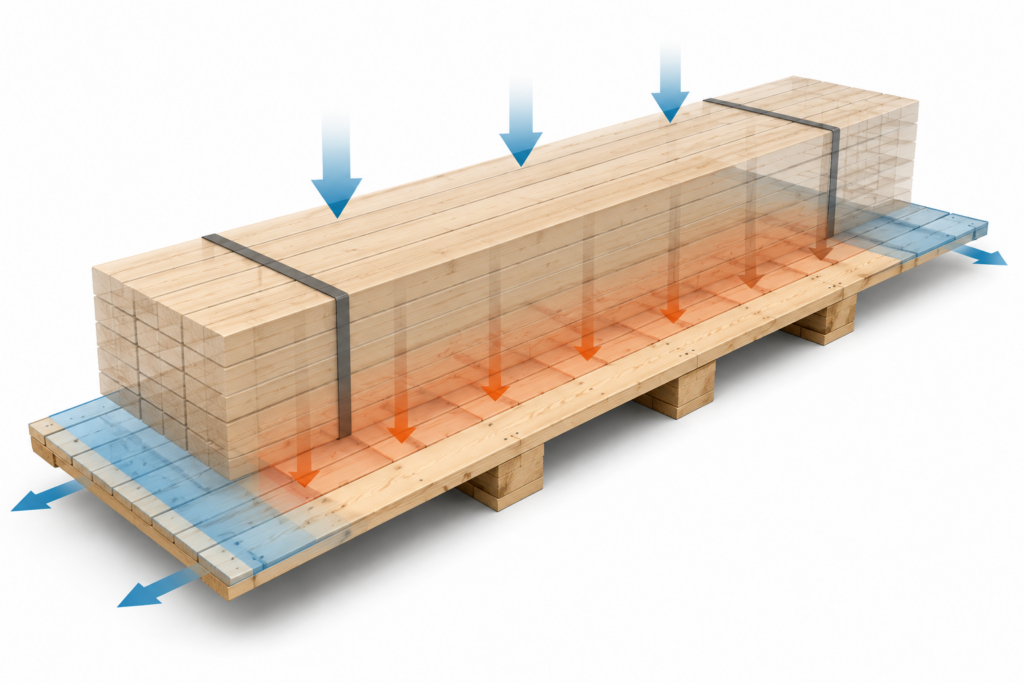
Key Takeaway: The decision to use a wing pallet should be based on how the product is supported, not just how much it weighs. Two loads with the same weight can require completely different pallet designs if their dimensions and weight distribution differ.
Choosing the Right Wing Pallet for Your Operation
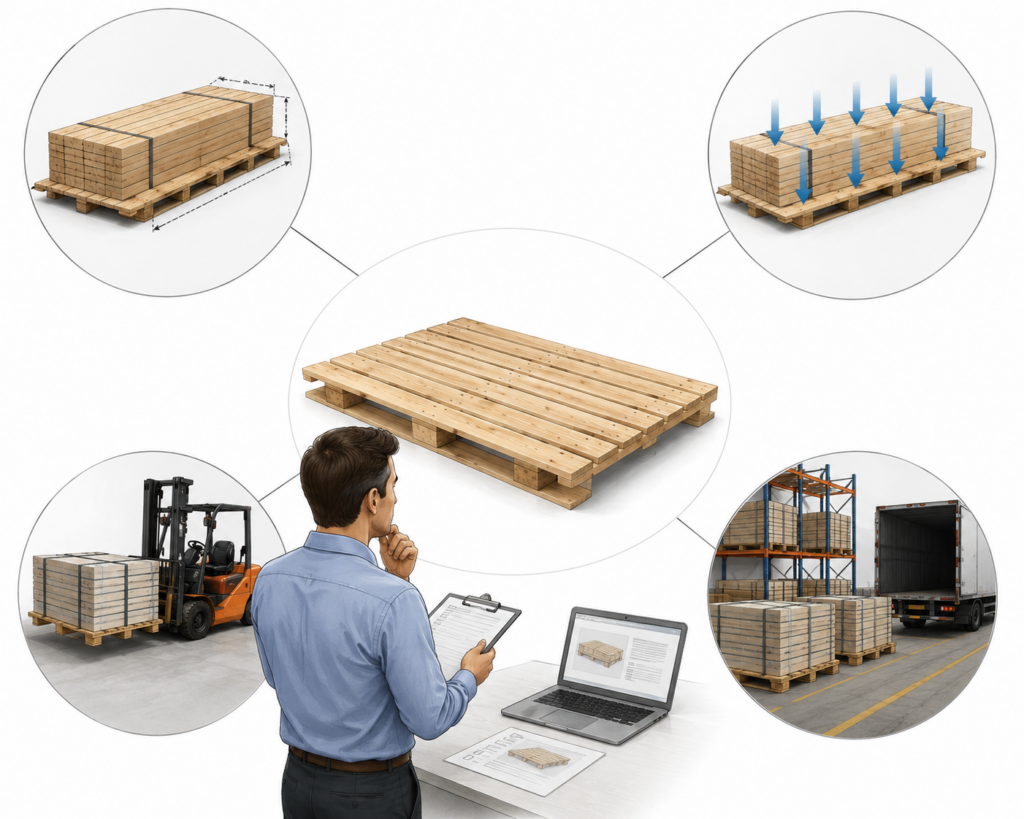
Selecting the right wing pallet starts with understanding the product, not the pallet. While dimensions are important, they’re only one part of the decision. The shape of the load, how it’s handled, where it’s stored, and whether it’s shipped locally or internationally all influence which design will perform best.
For example, a long bundle of mouldings may benefit from additional deck support even though it’s relatively light. On the other hand, a compact machine component might be considerably heavier but fit perfectly on a conventional pallet without requiring wing extensions. Looking at weight alone can lead to choosing the wrong solution.
A Practical Evaluation Checklist
Before specifying a wing pallet, consider these questions:
| Consideration | Why It Matters |
|---|---|
| Does the product extend beyond a standard pallet? | Determines whether additional deck support is actually needed. |
| Is the load evenly balanced? | Uneven weight distribution may require a stronger or custom pallet design. |
| How will the pallet be handled? | Forklifts, conveyors, and storage systems can influence the most suitable configuration. |
| Will the pallet be reused? | Reusable pallets often justify a more durable construction. |
| Is the shipment domestic or international? | Export shipments may require ISPM 15 compliant wooden pallets. |
When a Wing Pallet Isn’t the Best Choice
A wing pallet is designed for specific handling challenges, not as a universal replacement for every pallet.
If your products fit comfortably within a standard pallet footprint, don’t require additional edge support, and move through conventional warehouse operations, a standard pallet is often the more practical and economical option.
Choosing the simplest design that safely supports the product is usually the most efficient long-term decision.
Common Specification Mistakes to Avoid
Even a well-built wing pallet can underperform if it’s specified incorrectly. Some of the most common issues include:
- Selecting wing extensions before evaluating the product dimensions.
- Assuming every warehouse rack or conveyor is compatible with extended deck boards.
- Designing around pallet size instead of how the load is supported.
- Choosing a standard configuration when the product would benefit from a custom pallet design.
These decisions may seem minor during purchasing, but they can affect handling efficiency, product stability, and long-term operating costs.
Final Thoughts
Choosing a wing pallet isn’t about upgrading from a standard pallet, it’s about selecting a design that matches the way your products are stored, handled, and transported. When the pallet is engineered around the load rather than forcing the load to fit a standard platform, businesses often achieve better product stability, safer handling, and more efficient day-to-day operations.
Whether you’re moving timber, fabricated steel, sheet materials, or other oversized products, taking the time to evaluate the right pallet design can make a meaningful difference throughout your supply chain.
If your operation requires a pallet designed around specific product dimensions or handling requirements, learning more about custom pallets or the experience behind The Pallet Factory can help you understand the options available before making a decision. When you’re ready to discuss your project, you can also contact our team for practical guidance based on your application rather than a one-size-fits-all recommendation.