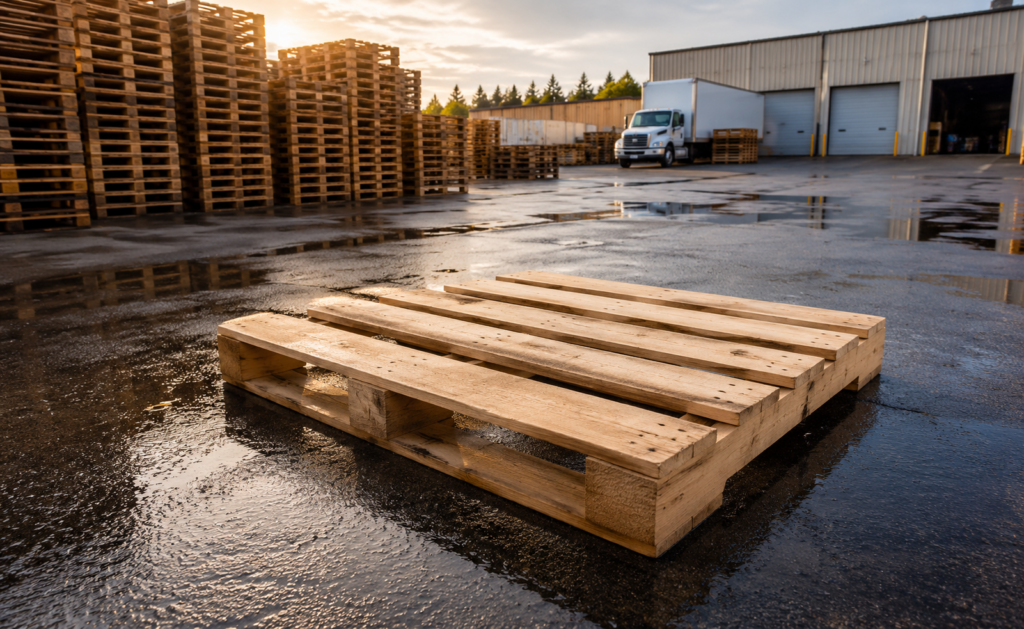
A stringer pallet is one of the most widely used pallet designs because it combines reliable load support with a simple, practical structure. From everyday warehouse handling to large-scale distribution, it continues to be a dependable choice for businesses across many industries.
The right pallet, however, depends on more than its appearance. Construction, forklift access, product weight, and handling requirements all influence whether a stringer design is the best fit. This guide explains how stringer pallets work, the different types available, where they perform best, and what to consider before choosing one for your operation.
Stringer Pallet at a Glance
| Feature | Quick Overview |
|---|---|
| Construction | Built with pallet stringers that run between the top and bottom deck boards to support the load. |
| Forklift Access | Available as 2 way stringer pallet and 4 way stringer pallet designs, depending on the stringer construction. |
| Best For | Warehousing, manufacturing, distribution, retail, and general shipping operations. |
| Load Support | Suitable for light, medium, and heavy-duty applications when built to the correct specifications. |
| Common Material | Primarily manufactured as a wood stringer pallet, with different wood species depending on the application. |
| Export Use | Can be used for international shipping when manufactured as heat treated pallets that meet ISPM 15 requirements. |
| Main Advantage | A practical balance of strength, cost, and easy repair for everyday material handling. |
Bottom Line: Many businesses assume every 4-way pallet is a block pallet, but that’s not always true. A 4 way stringer pallet uses notched stringers to provide forklift access from all four sides while maintaining a stringer-based construction. Understanding this difference helps you choose the right pallet instead of relying only on the number of entry points.
What Is a Stringer Pallet?
Instead of focusing on how many sides a forklift can enter from, think about what actually supports the load. That’s what defines a stringer pallet.
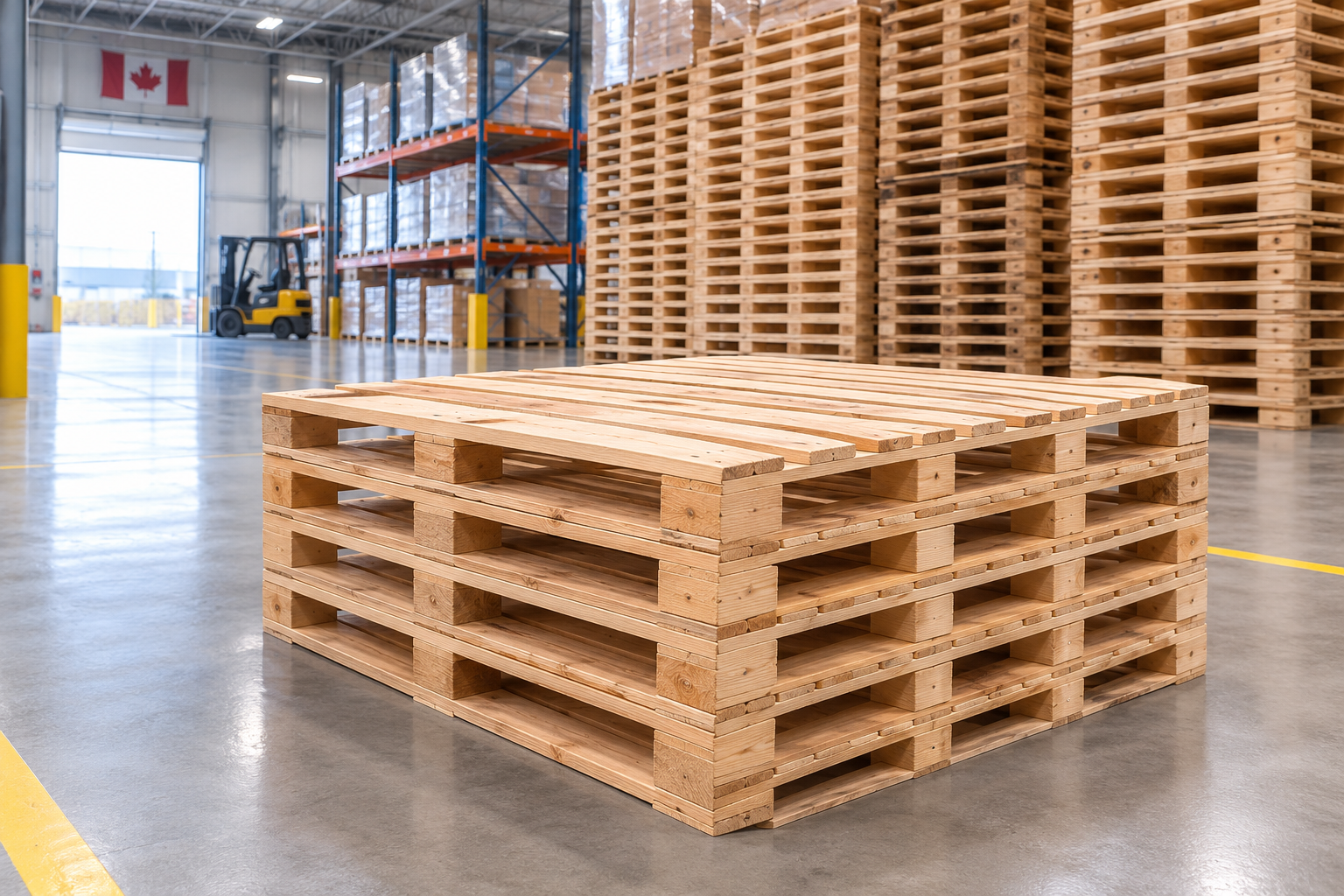
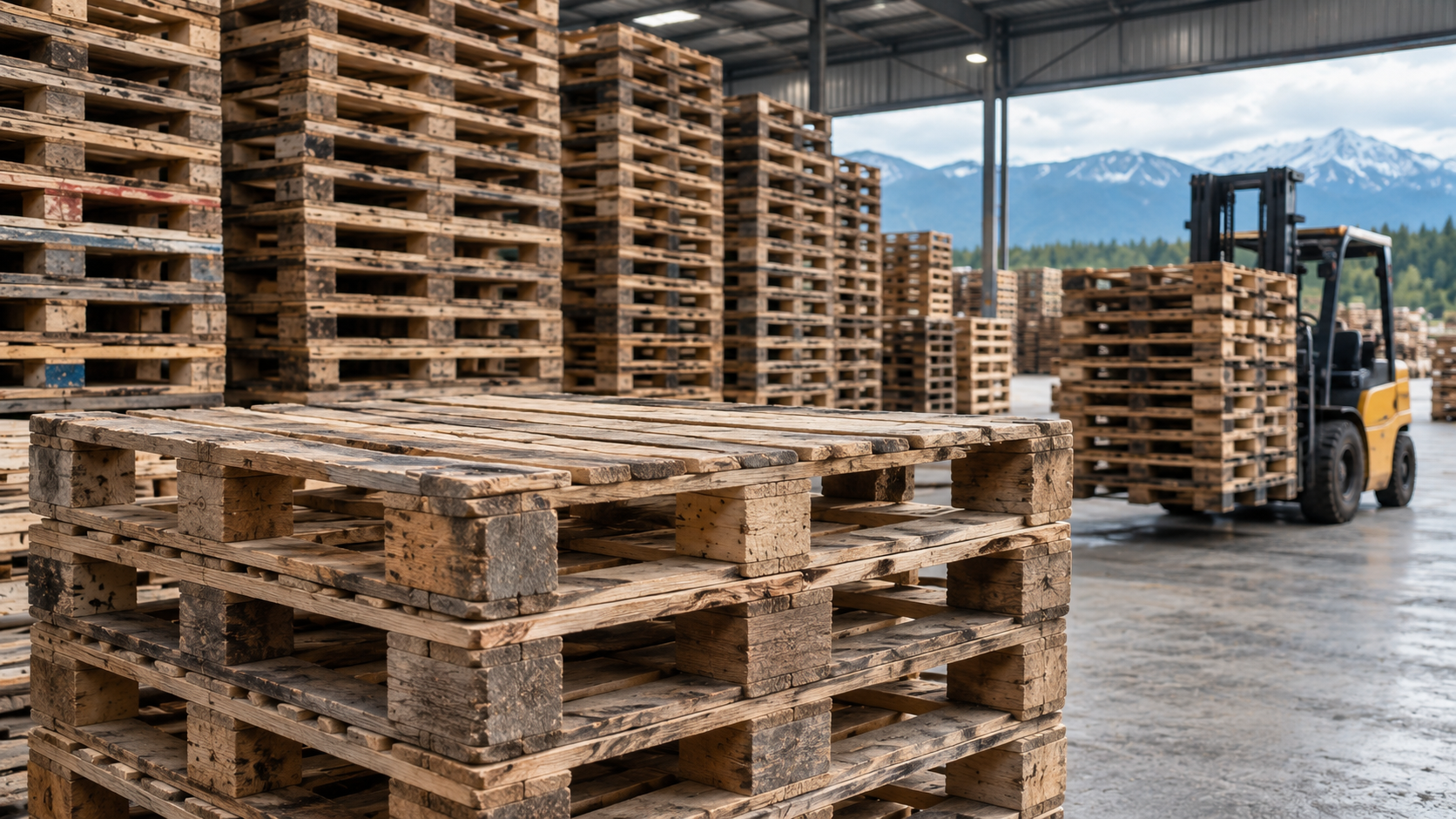
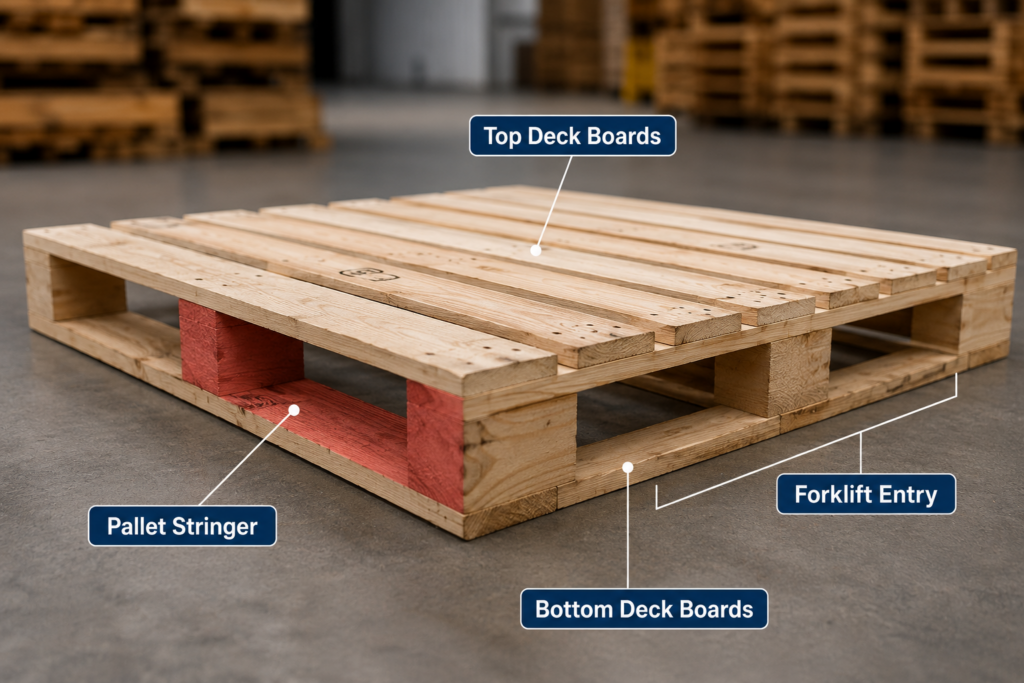
A stringer pallet gets its strength from long wooden support members called pallet stringers. These run between the top and bottom deck boards, creating the structural frame that supports products during storage, lifting, and transportation.
This construction is one of the most common pallet designs because it’s practical, repairable, and suitable for many warehouse and shipping operations.
Key Point: Don’t identify a pallet by the number of forklift entry points alone. A pallet is classified as a stringer pallet because of how it’s built, not simply because it’s 2-way or 4-way.
What Is a Pallet Stringer?
A pallet stringer is the long wooden support that forms the backbone of a stringer pallet. It sits between the top and bottom deck boards, carrying the weight of the load and helping distribute pressure evenly when the pallet is lifted or moved.
Without stringers, the pallet wouldn’t have the structural support needed to handle everyday warehouse and shipping operations.
Why Are Pallet Stringers Important?
The design and condition of the pallet stringers directly affect how well a pallet performs. Properly manufactured stringers help:
- Support the load evenly across the pallet.
- Reduce stress during forklift handling.
- Improve stability while products are stacked or transported.
- Extend the working life of the pallet through repeated use and repairs.
Key Takeaway: Most pallet damage starts at the stringers because they carry the majority of the load during lifting. Inspecting the stringers before reuse is one of the simplest ways to identify a pallet that may need repair or replacement. If damaged pallets are still structurally repairable, professional pallet services can often restore them for continued use instead of replacing them immediately.
How Does a Stringer Pallet Work?
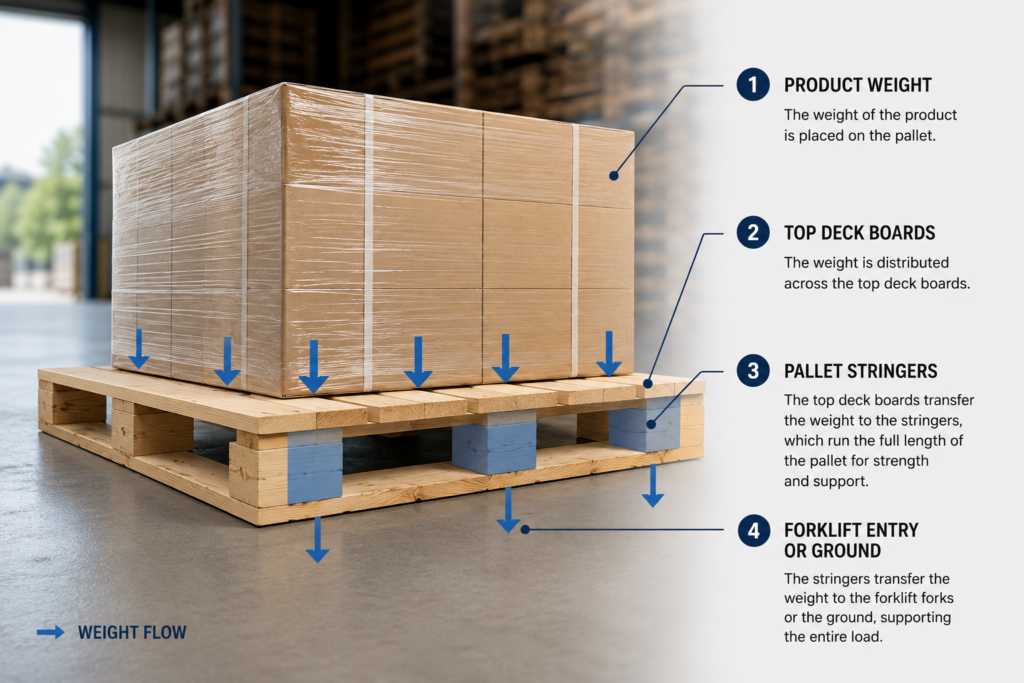
The strength of a stringer pallet comes from the way its components work together rather than from a single piece of wood. When products are placed on the pallet, the deck boards spread the weight across the pallet stringers, which then transfer the load evenly to the floor, warehouse racks, or forklift during handling.
This simple structural design helps reduce pressure on individual boards while keeping the load stable during lifting, storage, and transportation.
What Affects the Strength of a Stringer Pallet?
Several factors influence how well a wood stringer pallet performs under load:
- Wood species used during manufacturing.
- Number and size of the pallet stringers.
- Thickness of the deck boards.
- Overall pallet dimensions and construction quality.
- Whether the pallet is designed for light, medium, or heavy-duty applications.
Two pallets may look almost identical, but their load capacity can differ significantly depending on how they’re built.
Expert Insight: A thicker pallet isn’t automatically a stronger pallet. The spacing of the pallet stringers, board quality, and overall construction often have a greater impact on performance than thickness alone.
Quick Reference
| Component | Primary Function |
|---|---|
| Deck Boards | Support the product and distribute weight. |
| Pallet Stringers | Carry the load and provide structural strength. |
| Bottom Deck Boards | Improve stability and support during handling. |
Types of Stringer Pallets
Not all stringer pallets are built the same. While they all use pallet stringers as their main support, the way forklifts access the pallet can vary depending on the design. The two most common types are 2 way stringer pallets and 4 way stringer pallets, each suited to different handling requirements.
2 Way Stringer Pallet
A 2 way stringer pallet allows forklift entry from two opposite sides. The continuous stringers provide strong support, making this design a practical choice for businesses with straightforward warehouse layouts and predictable material handling.
4 Way Stringer Pallet
A 4 way stringer pallet uses notched pallet stringers, allowing forklifts to enter from all four sides. This design improves maneuverability in busy warehouses while maintaining the structural advantages of a stringer-based pallet.
Comparison Table
| Feature | 2 Way Stringer Pallet | 4 Way Stringer Pallet |
|---|---|---|
| Forklift Entry | Two opposite sides | All four sides |
| Stringer Design | Standard continuous stringers | Notched stringers |
| Handling Flexibility | Moderate | High |
| Best For | Regular warehouse operations | High-volume warehouses and distribution centres |
| Cost | Generally lower | Usually higher due to additional machining |
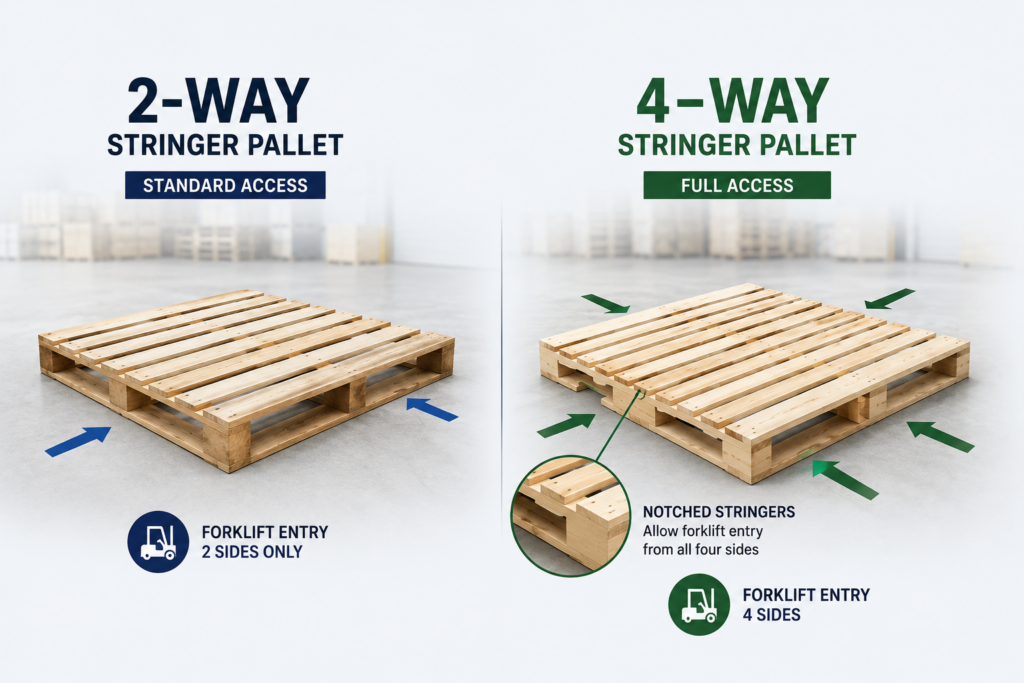
Bottom Line: A 4 way stringer pallet isn’t a different pallet construction—it’s still a stringer pallet. The difference is that the stringers are notched to create additional forklift entry points without changing the basic structural design.
Which Pallet Design Fits Your Operation Better
Every pallet design has a purpose. Choosing the right one isn’t about finding the strongest option—it’s about selecting the design that fits the way your business stores, moves, and ships products.
A stringer pallet and a block pallet may appear similar at first glance, but they solve different operational challenges. Understanding those differences can help improve warehouse efficiency, reduce handling issues, and avoid paying for features your operation may never use.
Decision Guide
| If your business needs… | Better Choice |
|---|---|
| A practical pallet for everyday warehouse operations | Stringer pallet |
| Maximum forklift access in busy facilities | Block pallet |
| A pallet that’s generally easier to repair | Stringer pallet |
| Better handling in high-volume distribution centres | Block pallet |
| A balance between performance and cost | Stringer pallet |
| Heavy-duty operations with frequent movement | Block pallet |
Why the Construction Matters More Than the Entry Points
Many buyers focus first on whether a pallet is two-way or four-way, but that’s only part of the picture. The construction underneath the pallet has a greater influence on strength, repair methods, and long-term performance than the number of forklift entry points alone.
That’s why two pallets with four-way access can still perform differently if one uses pallet stringers and the other uses support blocks.
Pro Tip: Don’t choose a pallet because another company uses it. Choose the one that matches your load weight, handling equipment, warehouse layout, and shipping process. A pallet that works perfectly in one facility may not be the most efficient option in another.
When Is a Stringer Pallet the Right Choice?
The best pallet isn’t always the strongest or the most expensive—it’s the one that fits the way your products are handled every day. A stringer pallet is often the right choice when reliability, repairability, and cost all matter equally.
Rather than choosing based on pallet type alone, consider how the pallet will be used throughout its working life.
Is a Stringer Pallet Right for You?
| If your operation involves… | A Stringer Pallet Is Usually a Good Fit |
|---|---|
| Daily warehouse storage | Yes |
| Manufacturing and production lines | Yes |
| Regular domestic transportation | Yes |
| Pallet repair and reuse programs | Yes |
| Medium to heavy product loads | Yes (when designed correctly) |
| Custom-sized products | With a custom-built design |
Common Applications
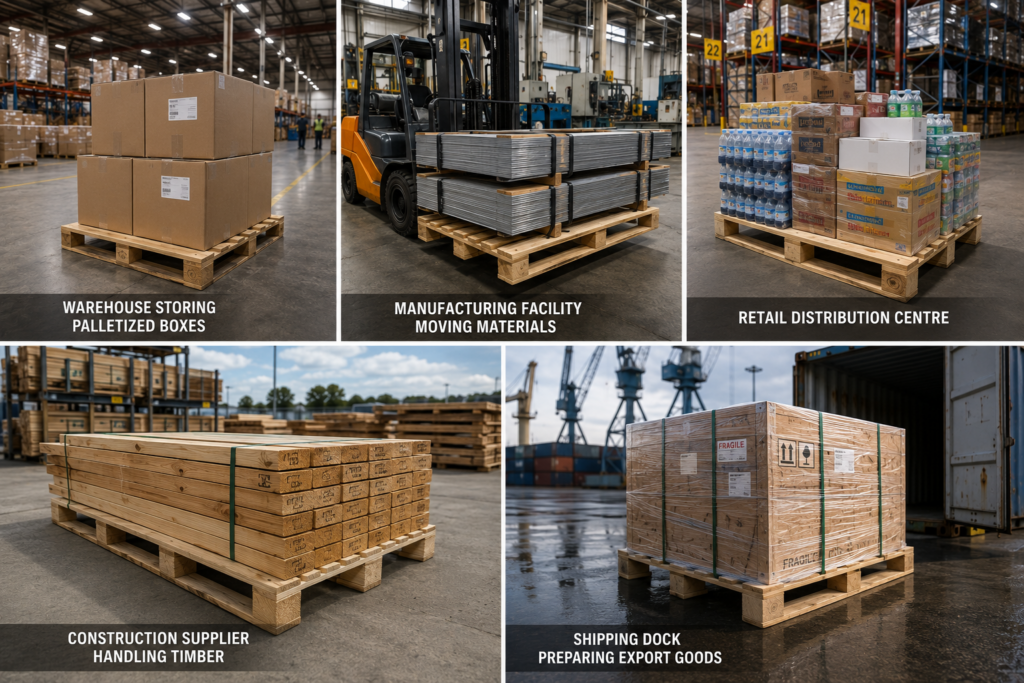
You’ll commonly find stringer pallets being used for:
- Manufacturing facilities moving raw materials and finished products.
- Warehouses storing palletized inventory.
- Retail distribution handling packaged goods.
- Building material suppliers transporting timber, panels, and construction products.
- Food and beverage businesses using properly specified heat treated pallets for export shipments.
- Industrial operations requiring dependable daily pallet handling.
If your products don’t fit standard pallet sizes or have unique handling requirements, custom pallets can be manufactured to match your exact specifications.
Can Stringer Pallets Be Repaired?
One reason stringer pallets remain popular across many industries is their repairability. When damage is limited to a deck board or one of the pallet stringers, the pallet can often be repaired instead of being discarded, depending on its condition and intended use.
Repairing suitable pallets helps businesses reduce waste, extend pallet life, and lower replacement costs—especially in operations where pallets are used repeatedly.
When Is Repair a Practical Option?
A pallet may be suitable for repair when:
- One or more deck boards are cracked or broken.
- Minor damage is limited to a single pallet stringer.
- The overall structure remains stable and safe to handle.
- The pallet still meets the operational requirements of the business after repair.
However, pallets with extensive structural damage or compromised load-bearing capacity should be replaced rather than repaired to maintain workplace safety.
Repair or Replace?
| Condition | Recommended Action |
|---|---|
| Minor deck board damage | Repair is often practical |
| Localized stringer damage | Repair may be possible after inspection |
| Multiple broken structural components | Replacement is usually the safer choice |
| Unknown load history or severe damage | Replace rather than reuse |
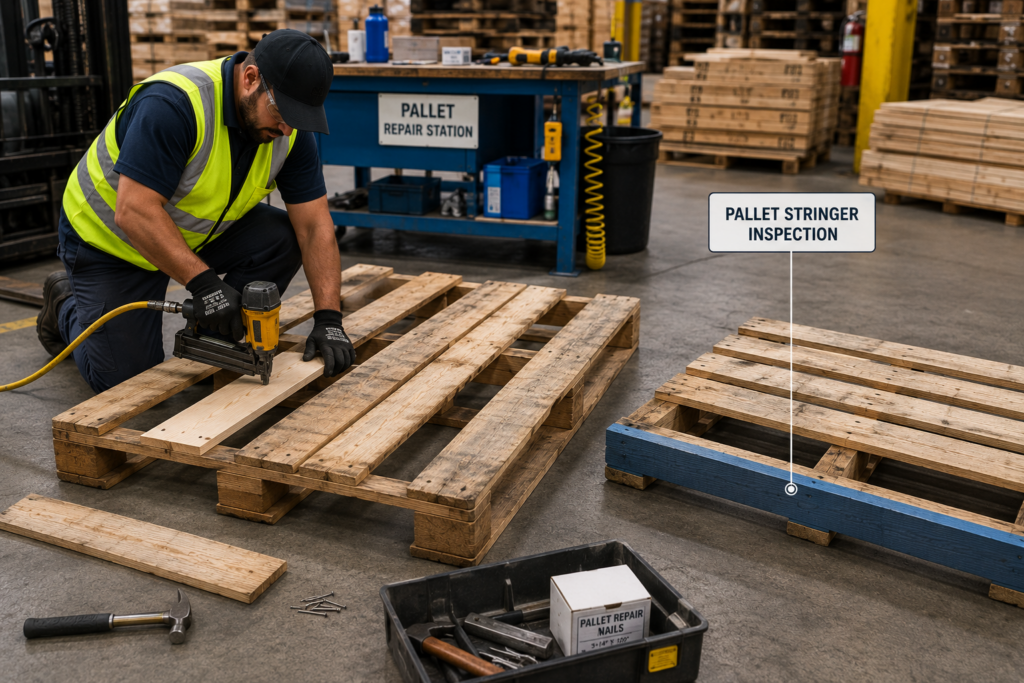
Bottom Line: A repaired pallet isn’t automatically lower quality. When repairs are carried out correctly using suitable materials, many pallets continue to provide reliable service in everyday warehouse operations.
Final Thoughts
Choosing the right stringer pallet starts with understanding how your products move through storage, handling, and shipping. While no single pallet design fits every operation, a well-built stringer pallet continues to be a dependable choice for businesses that value practical performance, straightforward maintenance, and long-term reliability.
Whether you’re comparing pallet designs, planning a new warehouse layout, or looking for a solution built around your products, working with an experienced pallet supply company can help you make a more informed decision. Learn more about The Pallet Factory or contact our team to discuss the right pallet solution for your business across British Columbia.