When products are heavier, larger, or moved more frequently, choosing the right pallet becomes more important than many businesses realize. Block pallets are designed to provide greater stability, better load distribution, and easier handling than many standard pallet designs, making them a popular choice across warehouses, manufacturing facilities, and distribution centres.
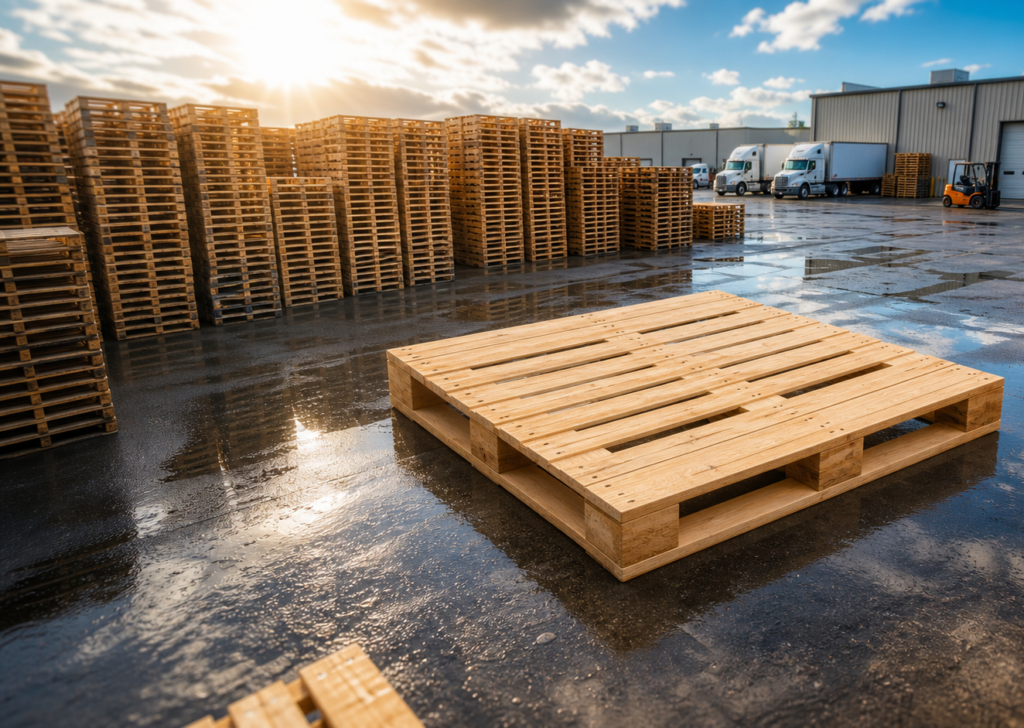
Whether you’re planning local deliveries, industrial storage, or export shipments, understanding how block pallets work can help you select a pallet that matches your products, handling equipment, and day-to-day operations.
What Is a Block Pallet?
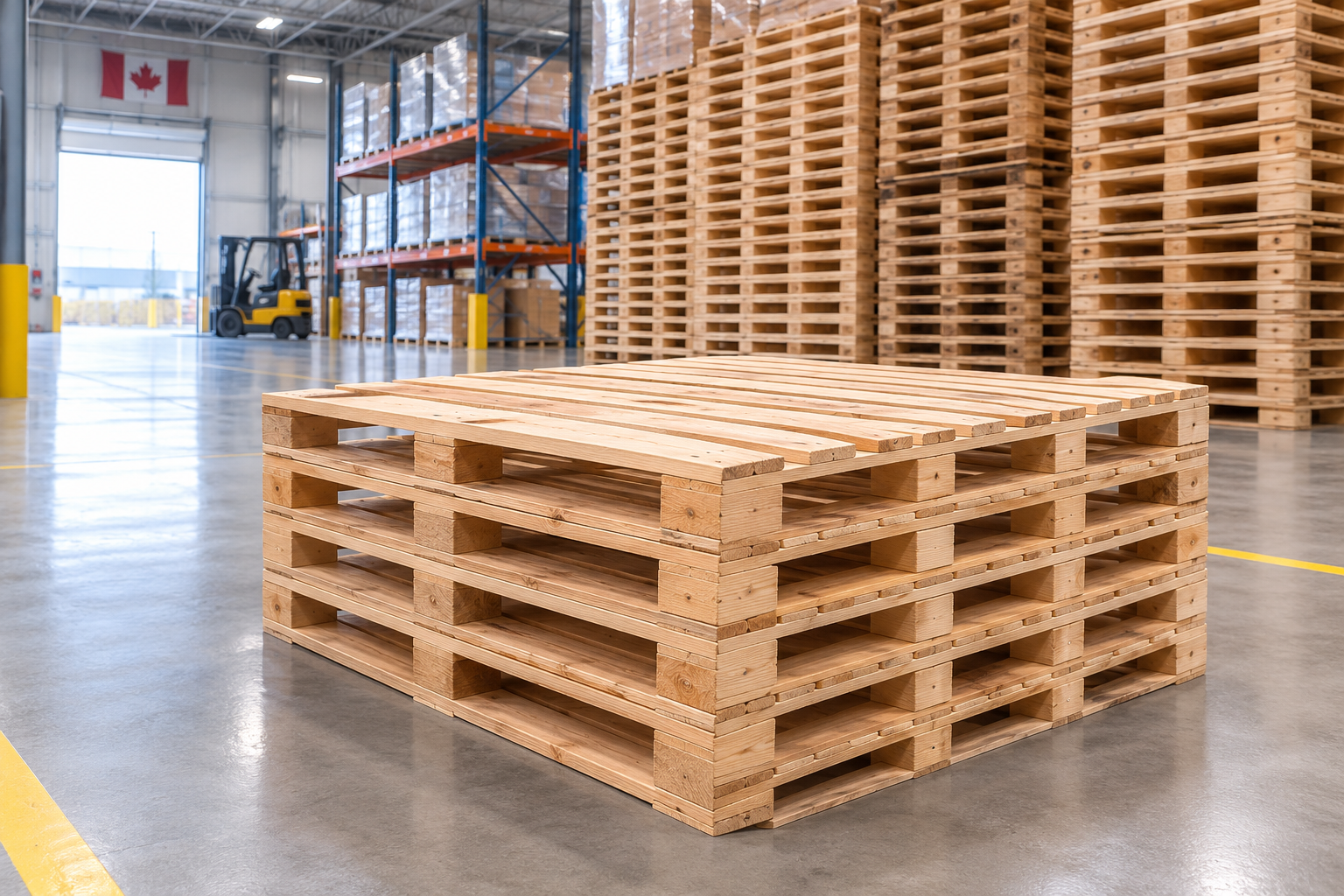
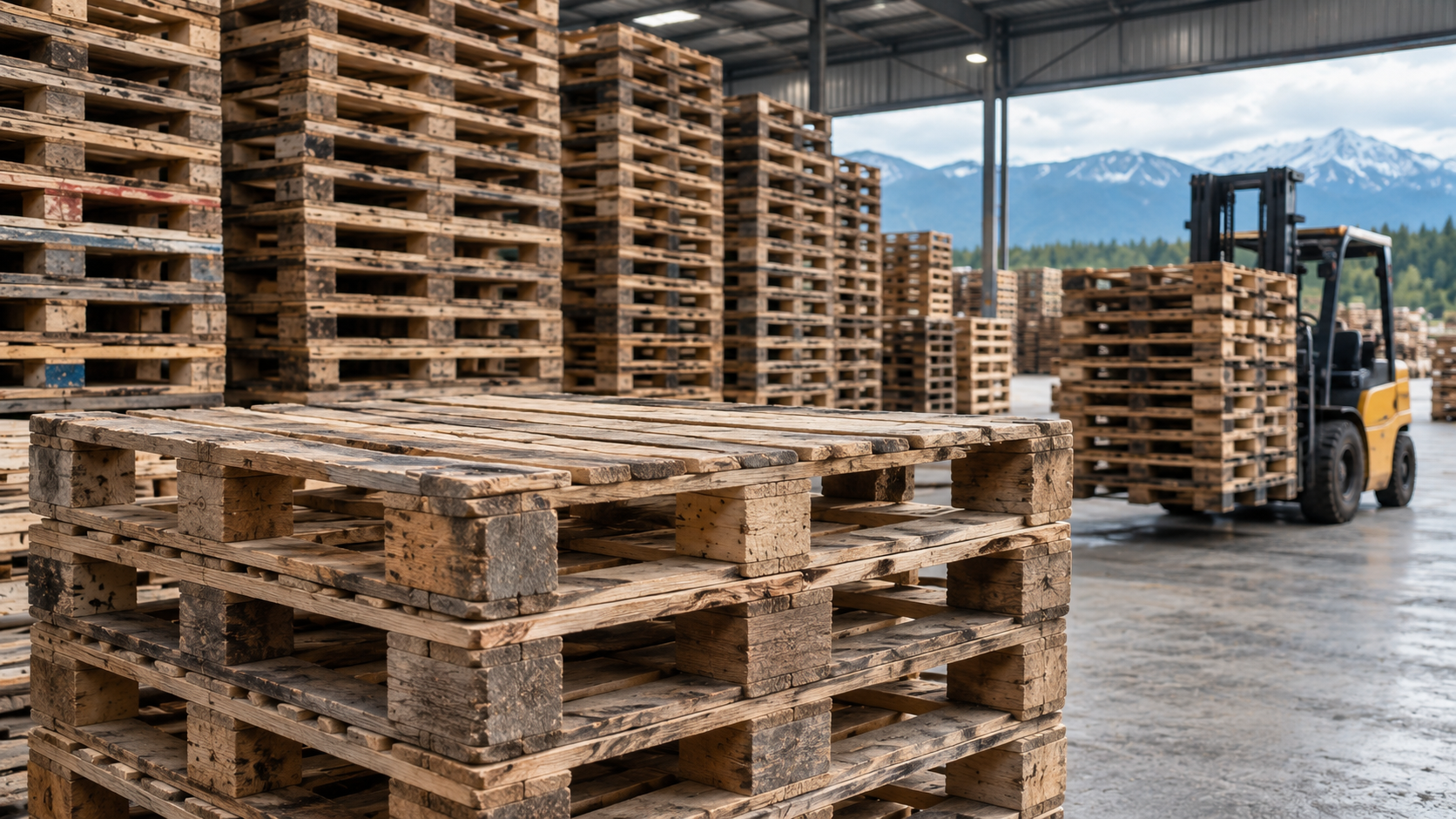
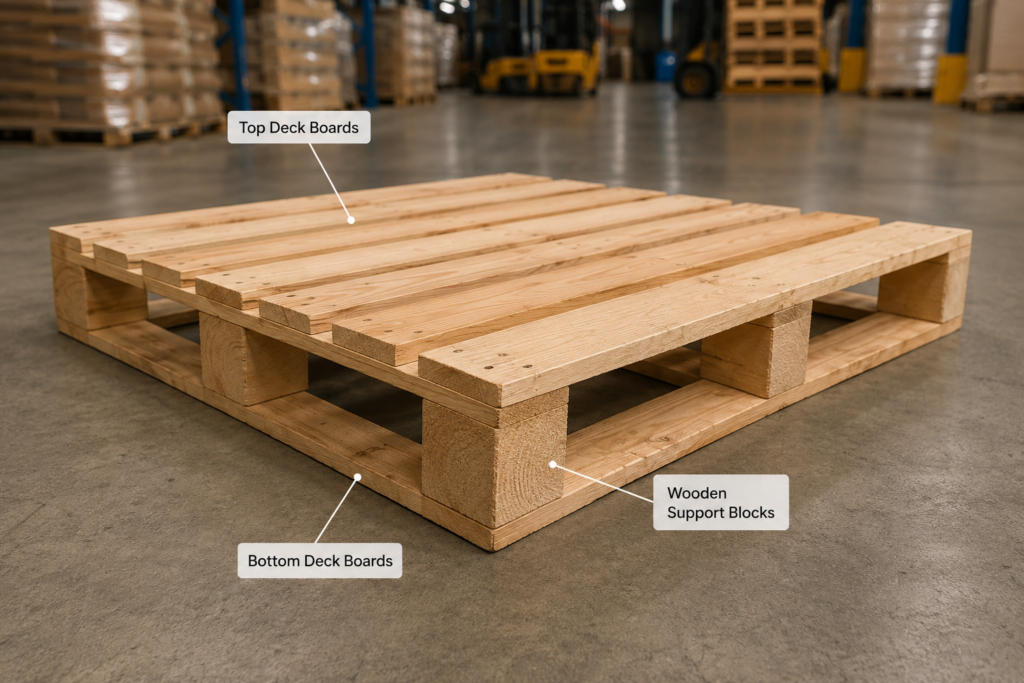
A block pallet is a wooden pallet built with solid support blocks placed between the top and bottom deck boards instead of long side stringers. These blocks create a stronger foundation and allow forklifts and pallet jacks to lift the pallet from all four sides, making it easier to handle in busy warehouses and shipping environments.
Unlike traditional stringer pallets, the support blocks distribute weight more evenly across the pallet. This improves stability when transporting heavier products, stacking loads, or moving goods repeatedly through manufacturing facilities and distribution centres.
Most wood block pallets are designed for demanding applications where strength, durability, and efficient material handling are priorities. Their reinforced construction helps reduce pallet movement under heavy loads while providing better support during lifting, storage, and transportation.
Because of these advantages, block pallets are widely used by manufacturers, logistics companies, exporters, and warehouses that require dependable pallet performance for everyday operations.
Quick Comparison
| Feature | Block Pallet |
|---|---|
| Support Structure | Solid wooden blocks |
| Forklift Entry | Four-way access |
| Best For | Heavy loads and frequent handling |
| Common Users | Warehouses, manufacturers, logistics companies |
| Typical Material | Hardwood or softwood, depending on application |
Why Are Block Pallets Stronger Than Standard Pallets?
The strength of block pallets comes from the way they are built. Instead of relying on long wooden stringers for support, they use solid wooden blocks positioned between the top and bottom deck boards. This design creates multiple load-bearing points that help spread weight more evenly across the pallet.
A more balanced weight distribution reduces stress on individual components during lifting, stacking, and transportation. As a result, wood block pallets are often chosen for products that require greater stability or are moved frequently through warehouses and production facilities.
Another advantage is their four-way entry design. Forklifts and pallet jacks can approach the pallet from any side, making loading and unloading quicker while reducing unnecessary handling. In busy distribution centres, this can improve workflow and make better use of available warehouse space.
While no pallet is suitable for every application, block pallets are commonly selected for operations that involve heavier products, repeated material handling, or automated storage systems where consistent support and reliable performance are important.
Pro Tip: A stronger pallet doesn’t always mean a thicker pallet. The overall design, support structure, wood quality, and construction all work together to determine how well a pallet performs under real working conditions.How to Choose the Right Block Pallet
A block pallet performs best when it matches the way your products are stored, handled, and transported. Instead of choosing the same pallet for every shipment, consider the practical requirements of your daily operations.
Product Weight
Start with the weight of your products. Heavier items usually require a pallet with better structural support to maintain stability during lifting, stacking, and transportation.
Handling Equipment
Think about how pallets move through your facility. If forklifts and pallet jacks approach pallets from different directions, block pallets with four-way entry can improve handling efficiency and reduce unnecessary repositioning.
Storage Environment
The way products are stored also influences pallet selection. High warehouse racks, stacked inventory, and long-term storage may require a pallet that provides consistent support under load.
Shipping Requirements
If your products are shipped internationally, pallet selection involves more than strength alone. Export shipments often require heat treated pallets that comply with international regulations, helping reduce delays at customs and protect the flow of goods.
Product Dimensions
Standard pallet sizes don’t always suit every product. Oversized, irregular, or unusually shaped items may require custom pallets designed around the dimensions of the load rather than forcing the product onto a standard pallet.
Block Pallets vs. Stringer Pallets: Which One Should You Choose?
Both block pallets and stringer pallets are widely used across warehouses, manufacturing plants, and distribution centres. The right choice depends on how your products are handled, the weight they carry, and the equipment used in your facility.
A block pallet is built with solid support blocks, allowing forklift access from all four sides. This design provides greater flexibility during loading and unloading, especially in fast-moving warehouses where pallets are lifted and repositioned throughout the day.
A stringer pallet, on the other hand, uses long wooden stringers as its main support. It is often a practical option for lighter loads, simpler storage requirements, and businesses that don’t need four-way forklift access for every shipment.
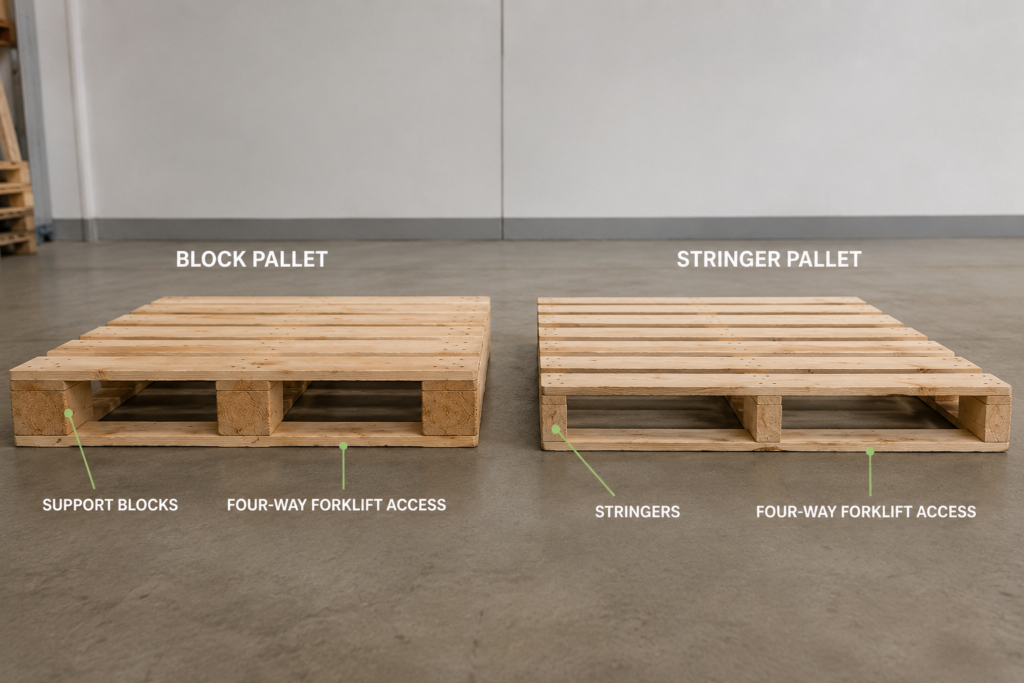
Rather than asking which pallet is stronger, it’s more useful to ask which pallet fits your operation better. For facilities with high product movement, frequent forklift use, or heavier loads, block pallets often provide better long-term performance. For standard shipping and general warehouse use, a stringer pallet may be a cost-effective solution.
Block Pallets vs. Stringer Pallets
| Feature | Block Pallets | Stringer Pallets |
|---|---|---|
| Support Structure | Solid wooden blocks | Long wooden stringers |
| Forklift Access | Four-way entry | Usually two-way (or partial four-way) |
| Load Distribution | More even across the pallet | Concentrated along stringers |
| Best For | Heavy products, frequent handling, warehouse operations | Standard shipping and lighter applications |
| Handling Efficiency | Higher in busy facilities | Suitable for routine operations |
| Custom Manufacturing | Widely available | Widely available |
When a Block Pallet Is Usually the Better Choice
Choose block pallets if your business:
- Handles heavier or high-value products.
- Uses forklifts throughout the day.
- Requires efficient loading and unloading.
- Operates in busy warehouses or distribution centres.
- Needs better stability during storage and transportation.
When a Stringer Pallet May Be Enough
A stringer pallet can be a practical option when:
- Products are relatively lightweight.
- Forklift access from all four sides isn’t necessary.
- Shipments follow a straightforward handling process.
- Budget is a higher priority than additional handling flexibility.
When Are Block Pallets the Right Choice?
Not every shipment needs the same type of pallet. Block pallets are designed for situations where strength, stability, and handling efficiency matter more than simply moving products from one place to another.
You should consider block pallets if your business regularly deals with:
- Heavy products that require extra support during storage and transportation.
- High-volume warehouse operations where forklifts move pallets throughout the day.
- Products that are stacked for longer periods and need better load stability.
- Distribution networks where pallets are loaded and unloaded multiple times before reaching their destination.
- Export shipments that require durable pallet construction and heat treated pallets for international shipping requirements.
Because they combine four-way forklift access with a reinforced support structure, wood block pallets are often chosen by manufacturers, logistics companies, distribution centres, food producers, and businesses handling industrial equipment.
Instead of selecting a pallet based only on price, consider how it will perform throughout your entire operation—from warehouse storage to final delivery. If you’re unsure which pallet design best fits your operation, our pallet services can help you choose the right solution for your storage, shipping, and handling requirements.
Decision Guide
| Your Requirement | Is a Block Pallet a Good Choice? |
|---|---|
| Heavy or bulky products | Yes |
| Frequent forklift handling | Yes |
| Busy warehouse operations | Yes |
| Long-term storage | Yes |
| Export shipments | Often, when heat treated |
| Light-duty local deliveries | It depends on your handling needs |
How to Choose the Right Block Pallet
A block pallet performs best when it matches the way your products are stored, handled, and transported. Instead of choosing the same pallet for every shipment, consider the practical requirements of your daily operations.
Product Weight
Start with the weight of your products. Heavier items usually require a pallet with better structural support to maintain stability during lifting, stacking, and transportation.
Handling Equipment
Think about how pallets move through your facility. If forklifts and pallet jacks approach pallets from different directions, block pallets with four-way entry can improve handling efficiency and reduce unnecessary repositioning.
Storage Environment
The way products are stored also influences pallet selection. High warehouse racks, stacked inventory, and long-term storage may require a pallet that provides consistent support under load.
Shipping Requirements
If your products are shipped internationally, pallet selection involves more than strength alone. Export shipments often require heat treated pallets that comply with international regulations, helping reduce delays at customs and protect the flow of goods.
Product Dimensions
Standard pallet sizes don’t always suit every product. Oversized, irregular, or unusually shaped items may require custom pallets designed around the dimensions of the load rather than forcing the product onto a standard pallet.
Quick Buyer Checklist
Before ordering block pallets, ask yourself:
- How much weight will each pallet carry?
- Will pallets be stacked for extended periods?
- How often will forklifts move them?
- Are the pallets intended for domestic or international shipping?
- Would a standard size work, or is a custom design more practical?
Common Mistakes When Buying Block Pallets
Choosing block pallets isn’t just about selecting the strongest option available. The right pallet should support your products, fit your workflow, and perform reliably throughout its service life. Avoiding a few common purchasing mistakes can help reduce unnecessary costs and improve day-to-day operations.
Choosing a Stronger Pallet Than You Actually Need
Block pallets are designed for demanding applications, but not every shipment requires that level of support. Selecting a heavier pallet for light-duty products can increase handling costs without providing any real operational benefit.
Ignoring Your Warehouse Layout
A pallet should fit the way your warehouse operates. Narrow aisles, storage racks, forklift turning space, and loading docks all influence how efficiently pallets move through a facility. Choosing a pallet without considering these factors can slow handling and reduce productivity.
Overlooking Reuse and Repair
Some businesses focus only on the initial purchase price without thinking about long-term use. If pallets will be reused regularly, durability and repairability become just as important as the upfront cost. A pallet that lasts longer often provides better value over time.
Buying Without Discussing Operational Requirements
Every business handles products differently. Sharing details such as product dimensions, load weight, storage methods, and shipping frequency with your supplier helps ensure the pallet is built for your actual requirements instead of relying on a standard specification.
Before You Place an Order
Use this quick checklist before purchasing block pallets:
| Ask Yourself | Why It Matters |
|---|---|
| How will the pallet be used every day? | Helps match the design to your workflow. |
| Will the pallets be reused frequently? | Influences long-term value and durability. |
| Does the pallet suit your storage system? | Improves handling and warehouse efficiency. |
| Have you shared your handling requirements with your supplier? | Helps avoid ordering a pallet that doesn’t fit your operation. |
Final Thoughts on Block Pallets
The right pallet does more than support a load—it helps improve handling, protect products, and keep daily operations running efficiently. Block pallets are a practical choice for businesses that need greater stability, reliable four-way forklift access, and dependable performance for heavier or frequently handled products.
Every operation is different, which is why choosing the right pallet starts with understanding your products, storage system, and shipping requirements. Whether you need standard block pallets, custom pallets for unique applications, or heat treated pallets for international shipping, selecting the right solution can improve both efficiency and long-term value.
As an experienced pallet supplier, The Pallet Factory works with businesses across British Columbia to provide practical pallet solutions for manufacturing, warehousing, logistics, and export operations. Learn more about The Pallet Factory, or contact our team if you’d like help choosing the right pallet for your business.