Choosing the right pallet can make daily handling, storage, and shipping much more efficient. 4 way pallets are designed to give forklifts access from all four sides, making them a practical choice for warehouses, manufacturers, and distribution centres that move products regularly. In this guide, you’ll learn how they work, where they’re used, how they compare with other pallet types, and what to consider before choosing the right pallet for your business.
What Are 4 Way Pallets?
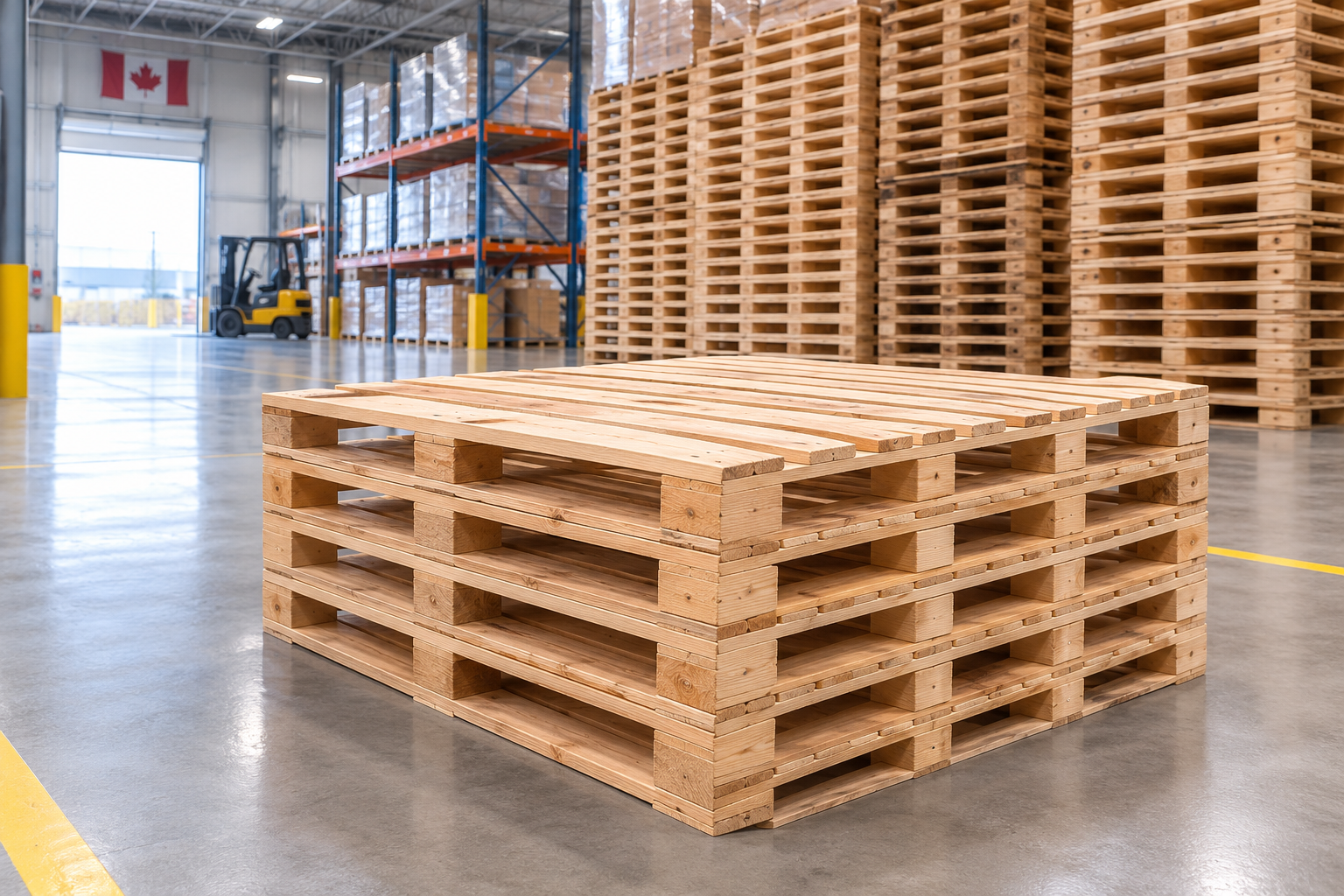
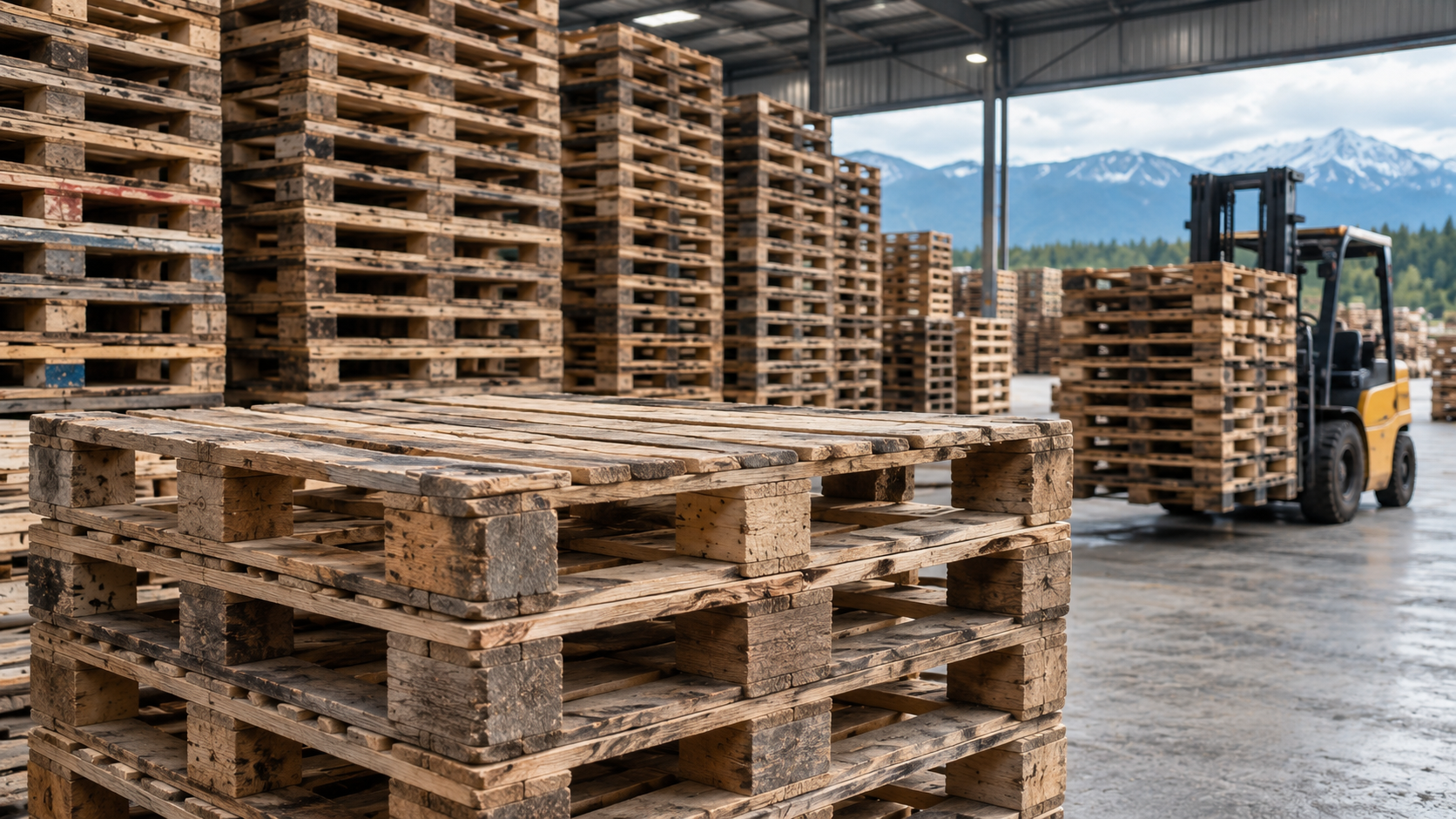
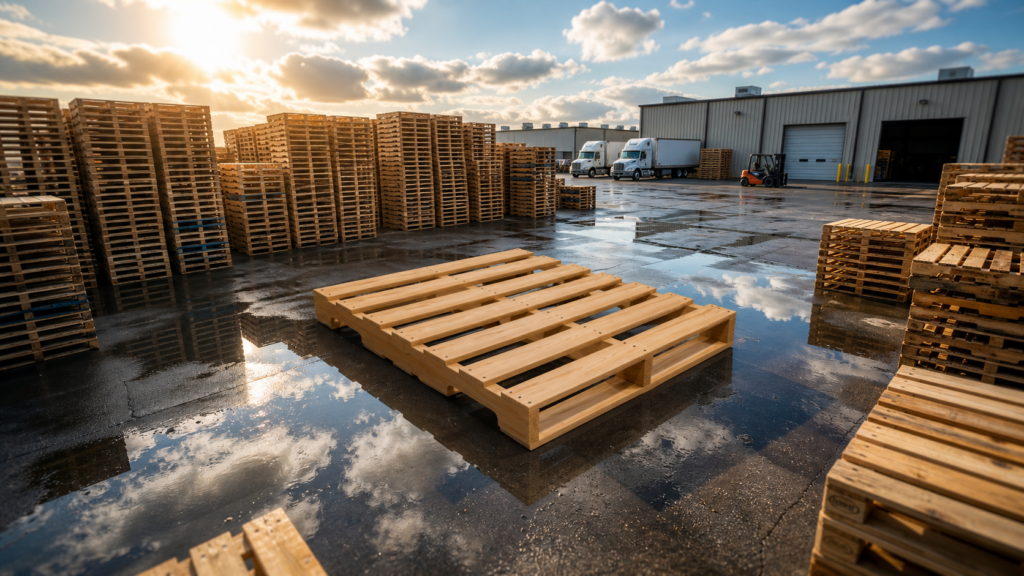
A 4 way pallet is a wooden pallet that allows forklifts or pallet jacks to enter from all four sides. This makes loading, unloading, and moving products faster than pallets with only two entry points.
Most 4 way pallets are built using block construction or notched stringers, giving businesses more flexibility when handling goods in warehouses, manufacturing facilities, and distribution centres.
Their four-sided access helps improve material handling, reduces forklift repositioning, and supports smoother day-to-day operations. That’s why they’re commonly used for storage, shipping, and high-volume product movement.
How Does a 4 Way Pallet Work?
A 4 way pallet improves product handling by giving forklift operators access from any side. Instead of repositioning the pallet to find an entry point, they can lift and move it from the most convenient direction.
This flexibility helps speed up loading and unloading, especially in busy warehouses where products are moved throughout the day. It also makes stacking, retrieving, and repositioning pallets easier when storage space is limited.
Because operators spend less time adjusting pallet positions, businesses can improve workflow, reduce unnecessary equipment movement, and handle shipments more efficiently.
Pro Tip: If products are moved multiple times between receiving, storage, picking, and shipping, the time saved with four-sided forklift access can add up significantly over thousands of pallet movements each month.
When Should You Use 4 Way Pallets?
Not every business needs a 4 way pallet. The right choice depends on how your products are stored, moved, and shipped each day.
They’re a practical option for warehouses with frequent forklift traffic, distribution centres handling high product volumes, and manufacturers that move materials between different workstations. Four-sided access helps keep products moving without unnecessary delays.
They’re also a good fit for businesses with limited warehouse space. Since forklifts can approach the pallet from any direction, operators have more flexibility when loading racks, trailers, or storage areas.
If your operation regularly handles large shipments or fast inventory turnover, 4 way pallets can improve handling efficiency and help maintain a smoother workflow.
Pro Tip: Before ordering pallets, map your product’s journey—from receiving to storage to shipping. If the pallet is lifted several times during that process, a 4 way pallet often delivers greater operational value than its higher purchase cost suggests.
Industries That Commonly Use 4 Way Pallets
4 way pallets are used across industries where products are moved frequently, stored in warehouse racking systems, or shipped in large volumes. Their flexible design makes them suitable for businesses that rely on efficient material handling and consistent product movement.
Manufacturing
Manufacturers use 4 way wooden pallets to move raw materials, finished products, and heavy components between production lines and storage areas. Easy forklift access helps keep production moving without unnecessary delays.
Warehousing and Logistics
For warehouses, distribution centres, and logistics companies, four way pallets simplify loading, unloading, and inventory movement. They also make it easier to position pallets in tight storage aisles and loading docks.
Retail and Wholesale Distribution
Retail suppliers and wholesalers often use four way wooden pallets when handling large inventory shipments. Better accessibility helps reduce handling time while improving stock replenishment and order fulfilment.
Food and Beverage
Businesses transporting packaged food and beverages often choose 4 way wooden pallets because they provide stable support during storage and shipping. When exporting products, many also use heat-treated pallets that meet international shipping requirements.
Export and International Shipping
Companies shipping products overseas commonly use four way pallet designs together with ISPM 15-certified heat-treated pallets to help meet international shipping regulations and reduce the risk of customs delays.
Pro Tip: Many businesses focus only on a pallet’s purchase price. In reality, the handling cost over its lifetime is often much higher. A pallet that saves just a few seconds during every forklift movement can improve efficiency significantly across thousands of shipments each year.
4 Way Pallets vs. 2 Way Pallets
Choosing between 4 way pallets and 2 way pallets depends on how your products are handled, stored, and transported. While both are reliable wooden pallets, they are designed for different operational needs.
| Feature | 4 Way Pallets | 2 Way Pallets |
|---|---|---|
| Forklift access | All four sides | Two opposite sides |
| Handling speed | Faster in busy operations | Best for straightforward handling |
| Warehouse flexibility | Better in tight spaces | Suitable for standard layouts |
| Material handling | Frequent movement | Regular storage and shipping |
| Best for | Distribution centres, logistics, manufacturing | Warehouses, local deliveries, general storage |
For businesses with frequent forklift movement and busy warehouse operations, four way pallets can improve handling efficiency by allowing access from multiple directions. This flexibility is especially valuable where products are moved several times before shipping.
On the other hand, 2 way pallets remain a dependable choice for businesses with simpler handling requirements. They offer strong support and are often a cost-effective solution for regular storage and transportation.
The right option depends on your daily workflow, available handling equipment, product weight, and storage system rather than choosing one design over the other.
How to Choose the Right 4 Way Pallet
Choosing the right 4 way pallet starts with understanding how it will be used. A pallet that works well for one business may not be the best option for another.
Consider Your Load
The size, weight, and type of product should always come first. Heavier or oversized products often require stronger wooden pallets built for higher load capacity and long-term durability.
Think About Your Storage System
If products are stored in warehouse racking, stacked for long periods, or moved frequently, choose pallets that match your storage layout and handling equipment.
Check Your Handling Equipment
Different facilities use different equipment, including forklifts and pallet jacks. Make sure the pallet design is compatible with the equipment your team uses every day.
Consider Shipping Requirements
If your products are shipped internationally, you may also need heat-treated pallets that comply with ISPM 15 regulations.
Work With the Right Pallet Supplier
A reliable pallet supplier can recommend the right pallet based on your products, handling process, and shipping requirements. This helps avoid unnecessary costs while improving day-to-day operations.
Bottom Line: Before placing a large pallet order, request a small sample and test it in your actual warehouse. Check how it performs with your forklifts, storage racks, product weight, and loading process. A simple trial can help identify handling issues before investing in hundreds or thousands of pallets.
Do You Need Standard or Custom 4 Way Pallets?
Standard 4 way pallets work well for many businesses, especially when products follow common pallet sizes and handling requirements. They offer a practical solution for everyday shipping, storage, and warehouse operations.
However, not every load fits a standard pallet. Products with unusual dimensions, heavier weights, or specific warehouse racking systems often require custom pallets designed for a better fit and safer handling.
Choosing the right pallet size and design can improve load stability, reduce product damage, and make transportation more efficient. If your business regularly handles unique products or specialized shipments, a custom solution may provide better long-term value than modifying a standard pallet.
Why Businesses Across British Columbia Choose The Pallet Factory
Choosing the right pallet is only part of the process. Reliable delivery, consistent quality, and dependable support are equally important for keeping daily operations running smoothly.
At The Pallet Factory, we supply 4 way pallets, custom pallets, heat-treated pallets, and other wooden pallet solutions to businesses across British Columbia, including Langley, Surrey, Vancouver, Burnaby, and nearby communities. Whether you need pallets for manufacturing, warehousing, logistics, or export shipping, we focus on providing solutions that match your operational requirements.
Along with manufacturing and pallet supply, we also provide pallet services to support product movement, scheduled deliveries, and ongoing pallet management. Businesses looking for complete support can explore our pallet services to find the right solution for their day-to-day operations.
Conclusion
4 way pallets are a practical choice for businesses that need greater flexibility during material handling, storage, and shipping. Their four-sided forklift access helps improve workflow, supports faster product movement, and makes them suitable for a wide range of industries.
The right pallet depends on your products, handling equipment, storage system, and shipping requirements. By choosing the right design, businesses can improve efficiency, protect their products, and support smoother day-to-day operations.
If you’re looking for reliable 4 way wooden pallets, custom pallets, or other wooden pallet solutions in British Columbia, our team is ready to help you choose the right option for your business.