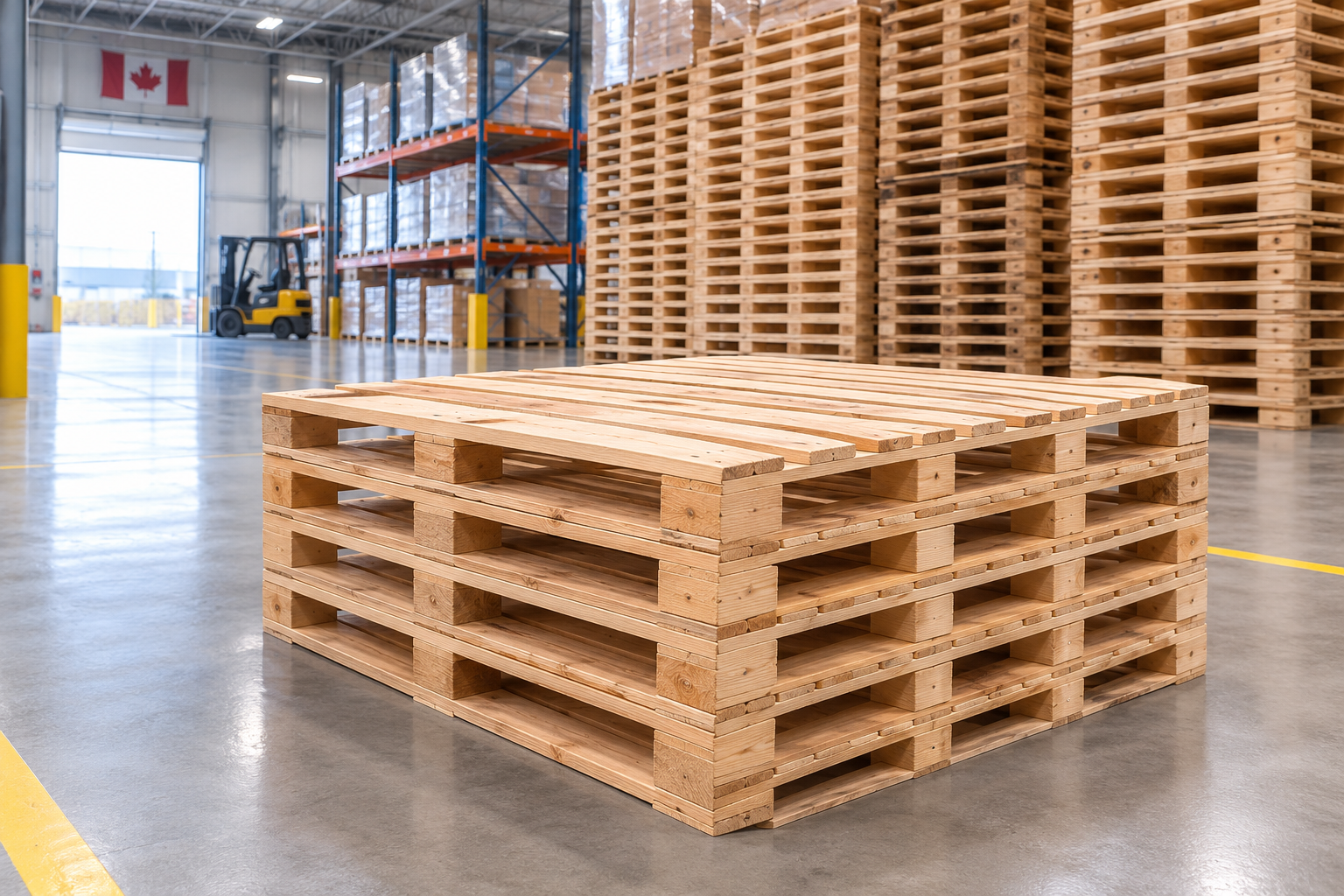
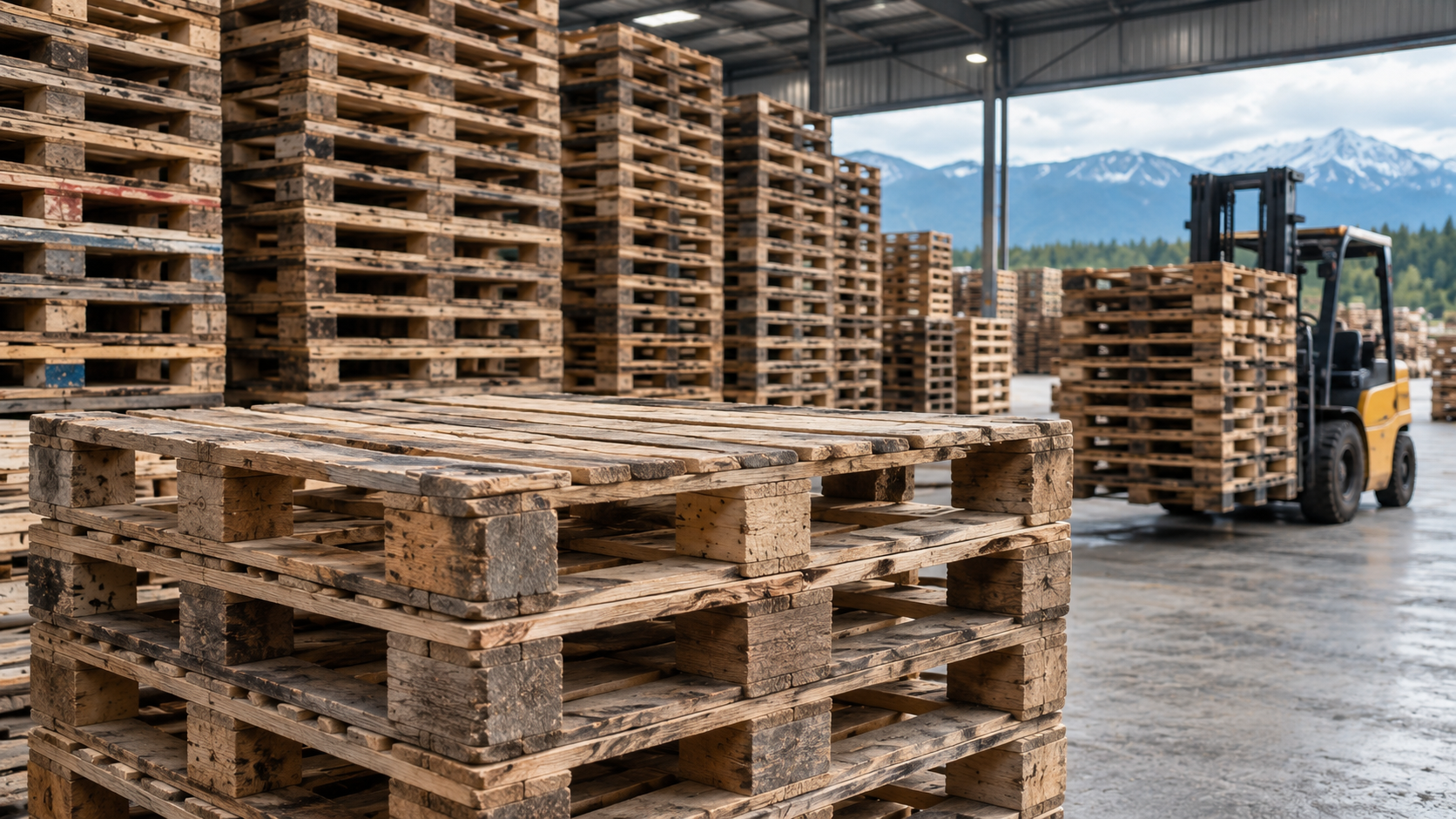
Heat treated pallets are required for many international shipments because they help prevent the spread of insects and plant diseases through wood packaging. If your products are exported without meeting ISPM 15 requirements, they may be delayed, rejected, or returned by customs.
Understanding when heat treated pallets are required can save time, reduce shipping risks, and help keep your supply chain moving. In this guide, you’ll learn how heat treatment works, what the HT stamp means, when it’s required, and how to choose the right pallets for export.
What Are Heat Treated Pallets?
Heat treated pallets are wooden pallets that have been heated to a specific core temperature to eliminate insects, larvae, and pests that may live inside the wood. This treatment helps prevent the spread of harmful organisms through international shipping and protects forests and agriculture in different countries.
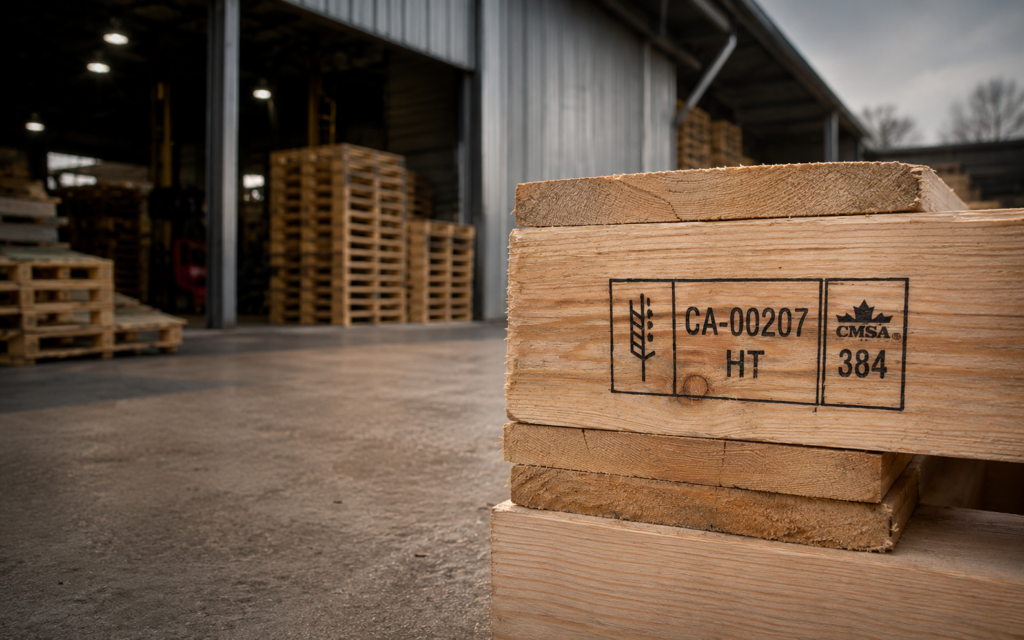
Unlike chemically treated pallets, heat treated pallets use only high temperatures to meet ISPM 15 requirements for wood packaging materials used in global trade. Once the treatment is completed and verified, the pallet is marked with an HT stamp, showing that it complies with international export standards.
Today, heat treated pallets are widely used by manufacturers, exporters, warehouses, and logistics companies that ship products across borders. They provide a safe, compliant, and reliable solution for businesses involved in international transportation.
How Does the Heat Treatment Process Work?
The heat treatment process is designed to make wooden pallets safe for international shipping without using chemicals. During treatment, the pallets are placed inside a specialized heat chamber where the wood is heated until its core reaches 56°C (132.8°F) for at least 30 minutes, as required by the ISPM 15 standard.
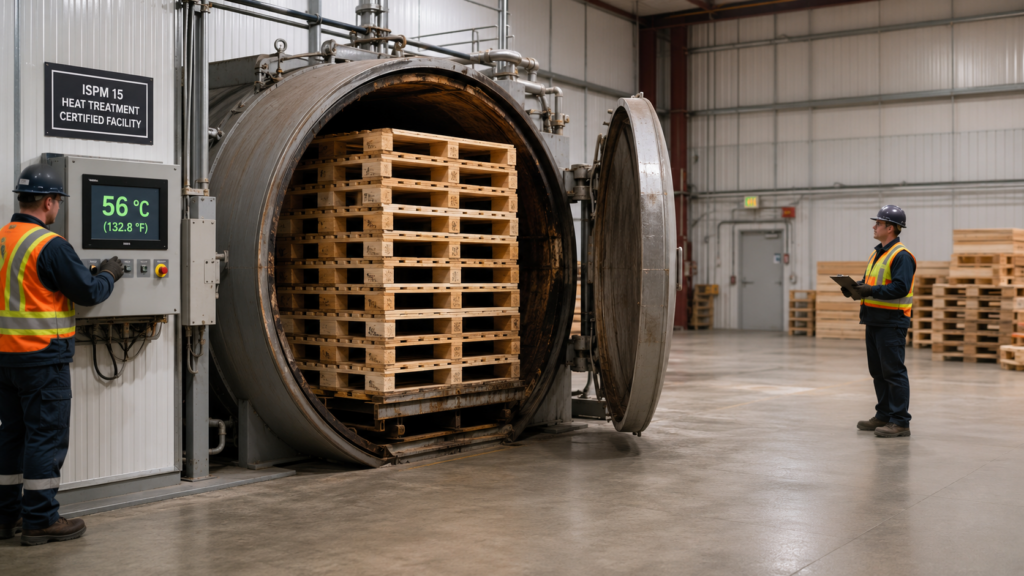
This controlled heating destroys insects, larvae, and other pests that may be hidden inside the wood. Once the treatment is complete, the pallets are inspected and marked with an HT stamp, confirming they meet international phytosanitary requirements for export.
It’s important to understand that heat treatment is different from simply drying wood. The process follows strict international guidelines and must be completed by an approved treatment facility before the pallets can be used for many export shipments.
How Heat Treated Pallets Are Prepared
- Wooden pallets are manufactured using suitable timber.
- The pallets are placed in a certified heat treatment chamber.
- The wood’s core temperature reaches 56°C (132.8°F) and is maintained for at least 30 minutes.
- The treatment process is monitored and verified.
- Approved pallets receive the official HT stamp before they are supplied for export use.
Bottom Line: Some buyers assume every new wooden pallet is export-ready. That’s not true. A pallet is only considered heat treated for international shipping if it has been processed according to ISPM 15 requirements and carries a valid HT stamp.
What Is ISPM 15 and Why Does it Matter?
If your business ships products internationally, understanding ISPM 15 is just as important as choosing the right pallet. ISPM 15 (International Standards for Phytosanitary Measures No. 15) is a global regulation developed to prevent insects and wood-borne pests from spreading between countries through wood packaging materials, including wooden pallets, crates, and dunnage.
To meet this standard, pallets must undergo an approved heat treatment process and be marked with an official HT stamp. This stamp confirms that the pallet has been treated according to international requirements and is suitable for many export shipments.
Without ISPM 15-compliant heat treated pallets, shipments may be delayed, refused entry, quarantined, or require additional treatment at the destination. For exporters, manufacturers, and logistics companies, using compliant pallets helps reduce the risk of customs issues and keeps international shipments moving efficiently.
What Information Does an HT Stamp Include?
A standard HT stamp typically contains:
- The official IPPC wheat symbol.
- A two-letter country code (such as CA for Canada).
- A unique producer or treatment facility number.
- The HT mark, indicating the pallet has been heat treated according to ISPM 15.
How to Identify a Heat Treated Pallet
Before using a heat treated pallet for export, it’s important to confirm that it meets international shipping requirements. While most compliant pallets carry an HT stamp, businesses should inspect the pallet itself rather than relying only on paperwork or supplier claims.
A quick visual inspection can help you identify whether a pallet is suitable for international shipments and reduce the risk of customs delays or rejected deliveries.
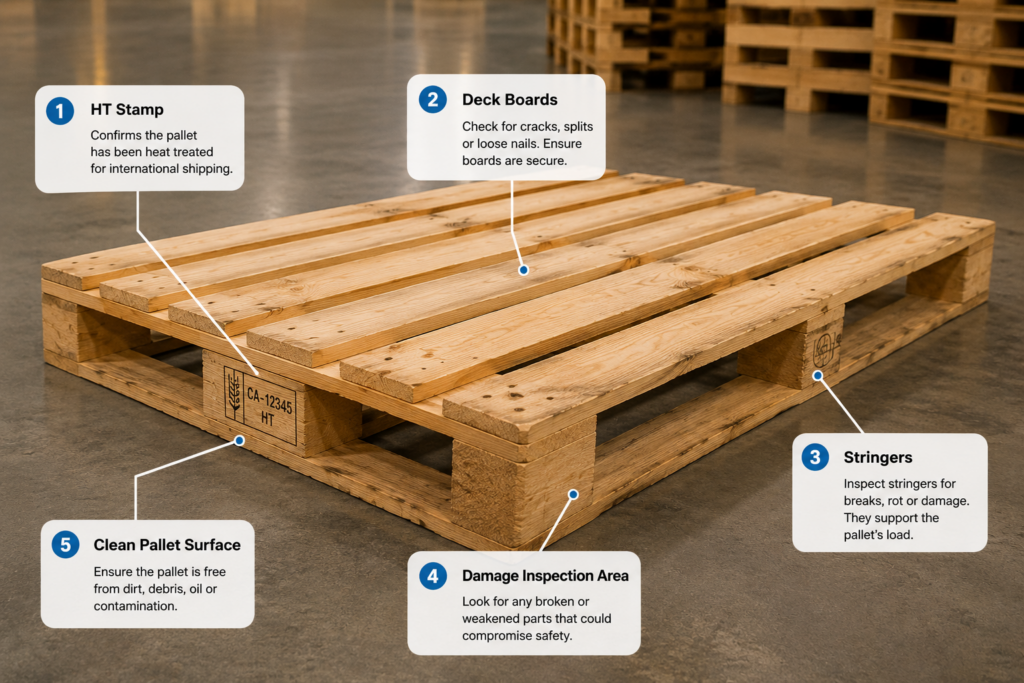
Checklist: How to Inspect a Heat Treated Pallet
Before loading your shipment, check that the pallet:
Has a clear and permanent HT stamp
Is free from major cracks, broken deck boards, or damaged stringers
Has no signs of insect infestation or mould
Is clean and free from soil, oil, or chemical contamination
Has not been painted over or repaired in a way that hides the stamp
Even a properly treated pallet can become unsuitable for export if it is heavily damaged or if the HT stamp can no longer be verified.
When Do You Need Heat Treated Pallets?
Not every shipment requires heat treated pallets, but they become essential when products are shipped to countries that follow ISPM 15 regulations. Businesses involved in exporting goods, international distribution, or cross-border logistics often use heat treated wooden pallets to help meet import requirements and avoid unnecessary shipping delays.
For shipments that stay within Canada, heat treated pallets may not always be required. However, many businesses still choose them because they offer a consistent solution for both domestic and international orders, making inventory and shipping operations easier to manage.
Industries That Commonly Use Heat Treated Pallets
Many industries rely on heat treated pallets as part of their regular shipping process, including:
- Manufacturing companies exporting finished products
- Warehousing and distribution centres
- Food and beverage suppliers
- Agriculture and produce exporters
- Industrial equipment manufacturers
- Retail and e-commerce businesses shipping internationally
- Import and export companies
- Logistics and freight providers
Using compliant pallets helps these businesses move products across borders while reducing the risk of customs issues caused by untreated wood packaging.
Pro Tip: If your business handles both domestic and export orders throughout the year, keeping heat treated pallets in stock can simplify warehouse operations. Using one compliant pallet type reduces confusion, helps avoid last-minute pallet changes, and keeps export shipments ready when opportunities arise.
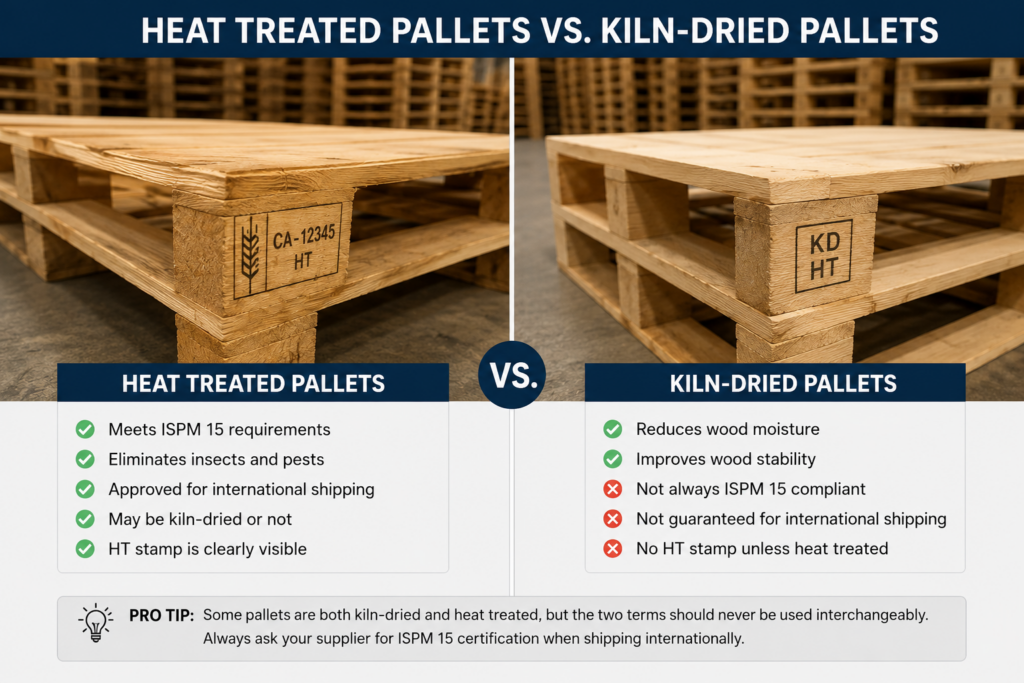
Heat Treated Pallets vs. Kiln-Dried Pallets
Although heat treated pallets and kiln-dried pallets are both exposed to heat, they are not the same. The biggest difference is why the wood is heated.
Heat treated pallets are processed to meet ISPM 15 requirements for international shipping. The goal is to eliminate insects and pests that could spread between countries through wood packaging materials.
Kiln-dried pallets, on the other hand, are primarily dried to reduce the wood’s moisture content. Lower moisture helps improve stability, minimizes warping, anWhy Businesses Choose Heat Treated Palletsd can reduce the chance of mould during storage. However, kiln drying alone does not always mean a pallet is approved for export.
| Feature | Heat Treated Pallets | Kiln-Dried Pallets |
|---|---|---|
| Primary purpose | Meet export regulations | Reduce wood moisture |
| ISPM 15 compliant | Yes (when properly certified) | Not always |
| Suitable for international shipping | Yes | Depends on certification |
| Controls insects and pests | Yes | Not necessarily |
| Improves wood stability | Somewhat | Yes |
For businesses involved in international shipping, choosing the correct pallet is more important than simply selecting dry wood. If your products are crossing international borders, always confirm that the pallets meet ISPM 15 requirements instead of assuming kiln-dried pallets are automatically compliant.
Why Businesses Choose Heat Treated Pallets
For businesses that ship products regularly, choosing the right pallet is about more than meeting export requirements. The right pallet can improve shipping efficiency, protect products, and reduce the risk of unexpected delays. That’s why many manufacturers, warehouses, and logistics companies choose heat treated pallets as part of their everyday operations.
Reliable for International Shipping
Because heat treated pallets meet ISPM 15 requirements, they are widely accepted for international shipments. Using compliant pallets helps businesses prepare shipments with greater confidence and reduces the chances of customs-related disruptions.
Better Protection for Products
Strong wooden pallets provide stable support during loading, storage, and transportation. When combined with proper pallet design and quality materials, they help reduce product movement and lower the risk of damage during handling.
A Practical Choice for Growing Businesses
Many businesses manage both domestic and export orders throughout the year. Keeping heat treated pallets available allows warehouse teams to use the same pallet type across different shipping requirements, making inventory management and order preparation more efficient.
Suitable for a Wide Range of Industries
From manufacturing plants and distribution centres to food suppliers and exporters, heat treated wooden pallets support a wide variety of products and shipping environments. Their versatility makes them a dependable option for businesses with changing logistics needs.
Choosing an experienced pallet supplier helps ensure you receive pallets that match your shipping requirements, product weight, and delivery schedule.
How to Choose the Right Heat Treated Pallets for Your Business
Choosing the right heat treated pallets starts with understanding how they will be used. The size of your products, shipment destination, storage method, and handling equipment all play a role in selecting the most suitable pallet. A pallet that works well for one business may not be the right choice for another.
Before ordering heat treated wooden pallets, consider these factors:
Product Weight
Heavier products require pallets with the right load capacity and structural support. Choosing a pallet designed for your product weight helps improve safety during lifting, storage, and transportation.
Shipment Destination
If your products are being exported, confirm that the pallets meet ISPM 15 requirements and carry a valid HT stamp. This helps avoid customs delays and keeps shipments moving smoothly.
Forklift and Warehouse Handling
The way your products are loaded and moved should influence your pallet choice. Businesses with fast-moving warehouse operations may benefit from different pallet designs depending on their handling equipment and storage layout.
Custom Size Requirements
Not every product fits a standard pallet. For oversized, heavy, or irregular loads, custom pallets can provide better support, improve load stability, and make transportation more efficient.
Pro Tip: The best pallet isn’t always the least expensive one. A pallet that matches your product, warehouse setup, and shipping method can reduce product damage, improve handling efficiency, and lower replacement costs over time.
Common Mistakes When Buying Heat Treated Pallets
Choosing the right heat treated pallets is about more than meeting shipping requirements. Small purchasing mistakes can lead to higher costs, damaged products, or pallets that don’t perform as expected.
Ordering the Same Pallet for Every Product
Not every product has the same handling or storage requirements. Using one pallet size or design for every shipment can reduce load stability and make transportation less efficient. Consider the weight, dimensions, and handling method before placing an order.
Focusing Only on Price
The lowest-priced pallet isn’t always the most cost-effective choice. Poorly built pallets may require frequent replacement or increase the risk of product damage. Looking at overall quality and long-term value often leads to better results.
Overlooking Warehouse Operations
A pallet should work with your warehouse—not against it. Before buying, consider how it will be stored, stacked, lifted, and moved throughout your facility. Choosing a pallet that matches your daily workflow can improve handling efficiency and reduce unnecessary delays.
Choosing a Supplier Without Ongoing Support
Reliable pallet supply is just as important as the pallet itself. Businesses that work with an experienced supplier often benefit from consistent availability, faster delivery, and practical recommendations as their shipping needs change.
Pro Tip: Before placing a large order, request a small batch and test the pallets with your products, racking system, and handling equipment. A short trial can help identify any issues before they affect day-to-day operations.
Final Thoughts on Heat Treated Pallets
Choosing the right heat treated pallets helps businesses protect their products, simplify export shipping, and support smoother warehouse operations. Understanding when they are required, how they are treated, and how to select the right pallet allows you to make more informed purchasing decisions and avoid unnecessary shipping challenges.
Whether you need pallets for regular exports or custom shipping requirements, working with an experienced pallet supplier can make a significant difference in day-to-day operations. Learn more about The Pallet Factory and how we support businesses across British Columbia with dependable pallet solutions built around real operational needs.
If you’re planning your next shipment or need help selecting the right pallet, contact our team. We’ll help you find a practical solution that fits your products, shipping requirements, and business goals.